Watermelon - Moon & Stars (Yellow-flesh) seeds
From $399 USDUnit price /UnavailableDescription
- The Moon & Stars Watermelon dark green rind and bright yellow spots
- Yellow spots are very unique and can be small or large in size
- All American classic heirloom watermelon - Deep yellow flesh
- Grows over 40 lbs
-
Days to Maturity | 90 days
-
Watermelons are heat-loving plants that need lots of sun. They grow on a long vine, so make sure to give them plenty of space to roam around.
- The Moon & Stars Watermelon dark green rind and bright yellow spots
-
Bee Balm, Spotted Wild Bergamot Flower seeds
From $399 USDUnit price /UnavailableDescription

- The Spotted Bee Balm plant produces a beautiful plant with purple spotted flowers known to attract bees and other beneficial garden pollinators
- Common names: bee balm, horsemint, oswego tea, and wild bergamot
- Smell is similar to Thyme
- Has been used in teas and for other medicinal purposes
- This plant is drought tolerant. Grows well in dry conditions, requiring little water to grow
- Can grow up to 40" tall
- Perennial
- The Spotted Bee Balm plant produces a beautiful plant with purple spotted flowers known to attract bees and other beneficial garden pollinators
 From $399 USDUnit price /Unavailable
Description
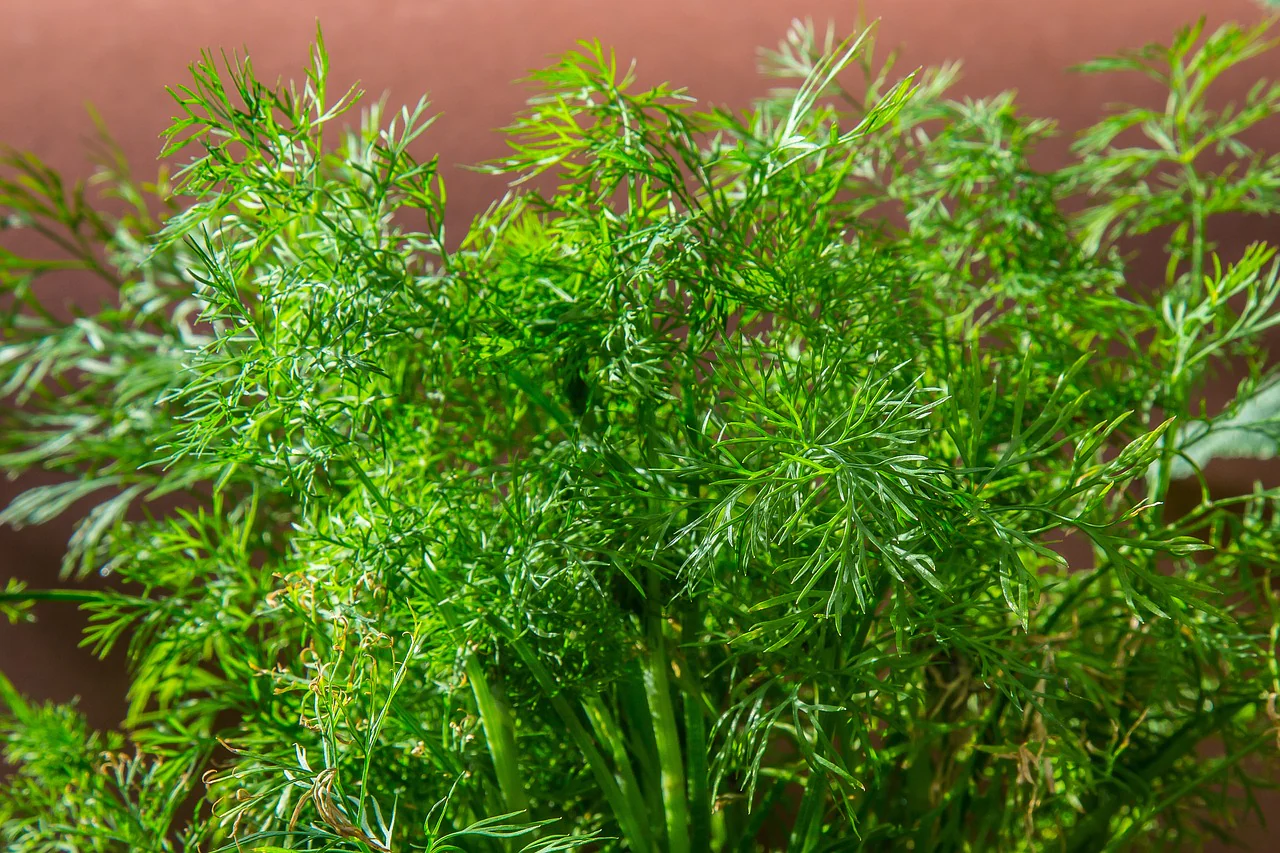
Dukat dill is a premium herb variety prized for its exceptional flavor and robust, dark green foliage. This annual plant produces large, full heads perfect for fresh use or drying. Ideal for homemade dill pickles, culinary dishes, and herbal remedies, Dukat thrives in full sun across containers, raised beds, or garden plots.
With a rich history spanning over 2,000 years, dill seeds have long been valued for supporting digestive health and relieving common discomforts. Whether you're harvesting fresh sprigs for the kitchen or preparing traditional infusions, Dukat delivers outstanding flavor and versatility to any herb garden.
- Dukat dill is a particularly fine plant with amazing flavor and large heads. If you like dill you will love to try this new variety in your garden.
- This variety is darker than most other dill varieties.
- Excellent fresh or dried.
- Great for homemade dill pickles.
- Can be grown in containers, raised beds, and any other location in full sun.
- Annual plant.
- Adds great flavor and color to many culinary creations.
Additional Details
Dill has a very long history of herbal use going back more than 2,000 years. The seeds are a common and very effective household remedy for a wide range of digestive problems. An infusion is especially efficacious in treating gripe in babies and flatulence in young children. The seed is aromatic, carminative, mildly diuretic, galactogogue, stimulant and stomachic.
Other Medicinal Properties
Dill is also used in the form of an extracted essential oil. Used either in an infusion, or by eating the seed whole, the essential oil in the seed relieves intestinal spasms and griping, helping to settle colic. Chewing the seed improves bad breath. Dill is also a useful addition to cough, cold and flu remedies, it can be used with antispasmodics such as Viburnum opulus to relieve period pains. Dill will also help to increase the flow of milk in nursing mothers and will then be taken by the baby in the milk to help prevent colic.
See Dill Recipes & Growing Tips on our Pinterest Board
Follow SeedsNow.com's board Dill on Pinterest. - Dukat dill is a particularly fine plant with amazing flavor and large heads. If you like dill you will love to try this new variety in your garden.
-
Coneflower, Purple Echinacea Flower seeds
From $399 USDUnit price /UnavailableDescription
Echinacea, also called Purple Coneflower, is an easy care perennial in the daisy family. Blooms bunches of blossoms with lavender petals skirting a brown spiky cone center atop sturdy stems that can grow 2'-4' tall. The leaves, flowers, buds, stems, and roots have been used medicinally for centuries, both dried and fresh, as an herbal tea, tincture, and oil infusion. Plant a deep pot, a small plot, or an entire lot!
- Immune system booster
- Attracts pollinators
- Long-lasting cut flower
- Good for containers
As a medicinal herb, Echinacea supports the immune system and has been used internally as a preventative against colds, flu, and chest congestion. It has also been used internally to treat anxiety, arthritis, asthma, colds, constipation, cough, depression, diphtheria, headache, inflammation, pain, rheumatism, sore throat, stomach cramps, strep throat, tonsillitis, tuberculosis, and whooping cough. Externally, Echinacea has been used to treat insect bites and stings, burns, dry or wrinkled skin, tired eyes, toothache, and wounds.
SEED PLANTING TIPS
- Botanical name: Echinacea purpurea
- Life cycle: Herbaceous perennial
- Hardiness zones: 3-9
- Planting season: Spring, summer, fall
- Days to maturity: 2 years; can begin harvesting when 6" tall
- Depth to plant seeds: Lightly cover - seeds need light to germinate
- Days to germinate (sprout): 7-30 days
- Germination soil temps: 65F-70F
- Spacing between plants: 12"-18" apart
- Spacing between rows: 18"-24" apart
- # of plants per sq. ft.: Appx. 1 plant per sq. ft.
- Soil types: Clay, sandy, loamy, silty, rocky, chalky, shallow, poor, rich, dry, well-drained
- Soil pH: 6.5-7.2
- Sun needs: Full sun, part shade
- Water needs: Low - do not overwater
- Cold stratify: Yes
- Frost tolerant: Yes
- Heat tolerant: Yes
- Drought tolerant: Yes
- Deer resistant: Yes
- Medicinal use: Yes

⚠️ Medicinal properties are presented as information only, and are not a recommendation or prescription for use. Consult a medical professional before using any herb medicinally.

Spinach - Monstrueux De Viroflay seeds
From $399 USDUnit price /UnavailableDescription
Monstrous Viroflay spinach is a variety of spinach known for its large, dark green leaves and delicious flavor. It is a popular choice among gardeners and spinach enthusiasts due to its impressive size and nutritional value.
This variety of spinach is named after the town of Viroflay in France, where it was first cultivated. It is known for its vigorous growth and ability to produce abundant harvests.
Monstrous Viroflay spinach is rich in vitamins A, C, and K, as well as iron, calcium, and fiber. It is a nutrient-dense leafy green that can be enjoyed in a variety of dishes, including salads, sautés, and smoothies.
One of the key features of Monstrous Viroflay spinach is its size. The leaves can grow up to 10 inches long, making them perfect for salads or as a side dish. The large leaves also make it easier to harvest and prepare the spinach.
When growing Monstrous Viroflay spinach, it is important to provide it with well-drained soil and ample sunlight. This variety thrives in cool weather and can be planted in early spring or late summer for a fall harvest.
Monstrous Viroflay spinach is a versatile and nutritious addition to any garden or kitchen. Its impressive size, delicious taste, and health benefits make it a favorite among spinach lovers.
-
How to Grow | Spinach is very hardy and can tolerate cold — in fact, it thrives in cold weather. Spinach grows really well during winter months in the South. Spinach also grows well in early spring and late summer in the North. These seeds should be planted about four weeks before your area's average date of last frost.
- Days to Maturity | 45 days
-
How to Grow | Spinach is very hardy and can tolerate cold — in fact, it thrives in cold weather. Spinach grows really well during winter months in the South. Spinach also grows well in early spring and late summer in the North. These seeds should be planted about four weeks before your area's average date of last frost.

Pepper (Hot) - Habanero, White 🔥🔥🔥🔥 seeds
From $399 USDUnit price /UnavailableDescription

The White Habanero Pepper produces lots of small 1"-2" fruits, all of them infused with smoky, sweet flavor and a heat like white lightning. These little thunderbolts start out green and ripen to a glossy pearl. Use them to wake up a pot of white bean chicken chili or add a flash of fire to a jar of mayonnaise.- Very high yields
- Sweet, citrusy flavor
- Hot enough to make a monkey cough
- Good for containers
SEED PLANTING TIPS
- Botanical name: Capsicum chinense
- Pepper length: 1"-2"
- Scoville heat units (SHU): 100,000-300,000/very hot
- Plant support: Tomato cage or stake
- Depth to plant seeds: .25" deep
- Spacing between plants: 18"-24" apart
- Spacing between rows: 24"-36" apart
- Days to germinate (sprout): 10-30 days
- Germination soil temps: 75F-85F
- Soil needs: 5.0-6.0 pH
- Sun needs: Full sun
- Frost hardy: No
- Planting season: Spring, summer
- # of plants per sq. ft.: Appx. 1 plant per sq. ft.
- Days to maturity: 85-105 days
Good companion plants: Basil, Carrot, Cucumber, Eggplant, Okra, Rosemary, Sage, Squash, Tomato
All Peppers ⟐ Hot Peppers 📚 Hot Peppers Grow Guide -
Pepper (Hot) - Scotch Bonnet, Red 🔥🔥🔥 seeds
From $399 USDUnit price /UnavailableDescription

The Red Scotch Bonnet Pepper is so named because its defined lobes resemble a Scotsman’s tam o’ shanter hat. Also called the Caribbean Red Pepper, the stout little fruit is sweeter and fruitier than its cousin, the Habanero, and hot enough to make a bird fly north for the winter. The plant puts out loads of 1"-2" green waxy fruits with thin skin that ripen through yellow, orange, and red. Its extreme heat and unique flavor is traditionally used in Caribbean hot sauce and jerk seasoning, but will be just as tasty and burn just as hot in any of your recipes.- High yields
- Fresh, fruity flavor
- Harvest any color
- Good for containers
SEED PLANTING TIPS
- Botanical name: Capsicum chinense
- Pepper length: 1"-2"
- Scoville heat units (SHU): 100,000-350,000/hot
- Plant support: Tomato cage or stake
- Depth to plant seeds: .25" deep
- Spacing between plants: 18"-24" apart
- Spacing between rows: 24"-36" apart
- Days to germinate (sprout): 7-21 days
- Germination soil temps: 75F-85F
- Soil needs: 6.0-7.0 pH
- Sun needs: Full sun
- Frost hardy: No
- Planting season: Spring, summer
- # of plants per sq. ft.: Appx. 1 plant per sq. ft.
- Days to maturity: 90-120 days
Good companion plants: Basil, Carrot, Cucumber, Eggplant, Okra, Rosemary, Sage, Squash, Tomato
All Peppers ⟐ Hot Peppers 📚 Hot Peppers Grow Guide  From $399 USDUnit price /Unavailable
Description
Hybrid

Mint, Peppermint- Peppermint is typically used in teas, jellies, deserts, and salads.
- Extremely fragrant.
- Sweet smelling.
- Acts as a natural wasp repellant.
- Perennial.
- Can be used as a garnish on ice cream and drinks.

Click here to see 7 Awesome Mint Drink Recipes HERE
Follow SeedsNow.com's board Mint on Pinterest.
- Peppermint is typically used in teas, jellies, deserts, and salads.
-
Onion - Walla Walla Sweet (Long Day) seeds
From $399 USDUnit price /UnavailableDescription

- The Walla Walla Sweet Onion variety will produces a globed shaped white onion
- Bulbs can reach 2 lbs
- This is one of the most popular Long day onion varieties available
- Easy to grow
- Perfect for beginners
- Grows well in containers and tight spaces
-
Days to Maturity | 110-120 days
Onion Seeds | Onions are easy to grow, have a fairly short growing period and take up little space in the garden. Plant onions 1/4 inch deep and 3 to 4 inches apart in double rows, leaving 6 to 10 inches between rows.
Click here for complete Onion grow guide
- The Walla Walla Sweet Onion variety will produces a globed shaped white onion
-
From $399 USDUnit price /Unavailable
Description

The Violet Star Artichoke is a dramatic alternative to the traditional Green Globe Artichoke. It produces a vibrant purple flower bud with a nutty flavor and creamy texture. Choose a sunny spot in your garden with lots of room for this dark beauty to grow. Artichokes are perennial plants that keep coming back bigger and more productive every year.
- Heat tolerant
- Drought tolerant
- Usually produces in 2nd year
- Perennial
 From $399 USDUnit price /Unavailable
Description

Rapeseed is also used as a cover crop in the US during the winter as it prevents soil erosion, produces large amounts of biomass, suppresses weeds and can improve soil tilth with its root system.
Rapeseed is the third-largest source of vegetable oil.Rapeseed is the second-largest source of protein meal in the world.
Rapeseed oil is used as diesel fuel, either as biodiesel, straight in heated fuel systems, or blended with petroleum distillates for powering motor vehicles.
Rapeseed (Brassica napus subsp. napus), is a bright-yellow flowering member of the family Brassicaceae (mustard or cabbage family), cultivated mainly for its oil-rich seed, which naturally contains appreciable amounts of toxic erucic acid.Rapeseed is the third-largest source of vegetable oil and second-largest source of protein meal in the world.
Source and Photo: Myrabella / Wikimedia Commons - https://en.wikipedia.org/wiki/Rapeseed

Sweet Woodruff (Sweet-Scented Bedstraw) seeds
From $399 USDUnit price /UnavailableDescription
Sweet Woodruff (Botanical name: Galium odoratum) also called Sweet-Scented Bedstraw, is a fast-growing, mat-forming herb and ground cover with dark green leaves and small, white, waxy, star-shaped flowers that bloom in spring. When crushed or cut, and especially dried, it has a grassy vanilla fragrance. Prefers partial to full shade, even under a Black Walnut tree. Add the leaves to fruit salads, jellies, and herbal teas, and use the flowers as an adorable and edible garnish. Reseeding and shallow runner roots enable it to spread easily.
A delightful shade-loving perennial herb that transforms shaded garden corners into fragrant, flowering ground cover. Sweet Woodruff's delicate white star-shaped blooms and soft green foliage create an enchanting spring display while its distinctive grassy vanilla scent develops when leaves are crushed or dried.
This versatile herb thrives in partial to full shade—even beneath challenging Black Walnut trees—making it perfect for difficult garden spots. Its shallow runner roots and natural reseeding habit allow it to spread gracefully as a living carpet, while attracting pollinators throughout the season.
Harvest fresh leaves for fruit salads, jellies, and herbal teas, or use the charming edible flowers as garnish.
Traditionally valued for its medicinal properties, Sweet Woodruff has supported wellness practices for centuries. Plant in spring, fall, or winter for a hardy perennial that requires minimal care and rewards you with beauty and fragrance year after year.
- Grassy vanilla fragrance
- Culinary and medicinal
- Attracts bees, butterflies, and other pollinators
As a companion plant, it attracts all sorts of friendly pollinators to the garden.
As a medicinal herb, Sweet Woodruff has been used internally to treat congestion, insomnia, migraine headaches, nerve pain, and water retention, and externally to treat burns, wounds, and swelling.
⚠️ Contains naturally occurring coumarin and should not be ingested in large quantities if you are taking medication for circulatory disorders or are pregnant.
⚠️ Medicinal properties are presented as information only, and are not a recommendation or prescription for use. Consult a medical professional before using any herb medicinally.
SEED PLANTING TIPS
- Botanical name: Galium odoratum
- Life cycle: Herbaceous perennial
- Planting season: Spring, fall, winter
- Days to maturity: 90-120 days
- Depth to plant seeds: 1/4" deep
- Days to germinate (sprout): 10-200 days
- Germination soil temps: 60F-70F
- Spacing between plants: 8"-12" apart
- Spacing between rows: 18"-24" apart
- # of plants per sq. ft.: Appx. 1 plant per sq. ft.
- Soil types: Clay, sandy, loamy, rich, moist, well-drained
- Soil pH: 4.3-8.3
- Sun needs: Full shade, part shade
- Water needs: Average
- Cold stratify: Yes
- Frost tolerant: Yes
- Heat tolerant: No
- Drought tolerant: No
- Deer resistant: Yes
- Culinary use: Yes
- Medicinal use: Yes
-
Lunaria Silver Dollar (Money Plant) Flower seeds
From $399 USDUnit price /UnavailableDescription
The Lunaria Silver Dollar (Lunaria annua) is a most unusual biennial. Also called Money Plant, Honesty Plant, and Moonwort, it produces small, fragrant lavender blossoms with a separate seed pod in the form of a flat, translucent disk membrane. When immature, the disk is green. As the plant dies, the seed pod turns as silvery and shimmery as a full moon or silver dollar coin. Grows 2'-3' tall on thin, hairy stems with serrated, heart-shaped foliage. Fantastic in dried floral arrangements or wreaths.
- Life cycle: Herbaceous biennial
- Bloom season: Spring
- Attracts: Bees, butterflies, and other pollinators
- Flower meaning: Honesty, money, sincerity
SEED PLANTING TIPS
- Botanical name: Lunaria annua
- Hardiness zones: 5-9
- Planting season: Summer, fall
- Days to maturity: 2nd year
- Cold stratify: Yes
- Depth to plant seeds: Lightly cover - seeds need light to germinate
- Spacing between plants: 12"-18" apart
- Days to germinate (sprout): 10-14 days
- Germination soil temps: 60F-70F
- Soil types: Sandy, loamy, rich, well-drained
- Soil pH: 6.0-7.5
- Water needs: Average
- Sun needs: Full sun, part shade
- Frost tolerant: Yes
- Drought tolerant: Yes
- Deer resistant: No
-
Shiso, Green (Perilla Leaf, Japanese Basil) seeds
From $399 USDUnit price /UnavailableDescription
Green Shiso (Perilla frutescens), also called Perilla Leaf and Japanese Basil, is an herb in the mint family with large, bright green, wrinkled, serrated leaves. Not as spicy as Red Shiso. Used extensively in Japanese cuisine, it has a fresh minty-basil flavor with notes of clove and cumin, and a bitter, astringent finish. Pairs well with fish, rice, noodles, and vegetables, especially cucumbers. Also a medicinal herb with antioxidant, anti-bacterial, anti-inflammatory, and antiseptic properties. Its rhizome root can become invasive, so best grown in a container.
- Mint-basil-clove-cumin flavor
- Full sun
- Days to germinate (sprout): 7-21 days
- Days to maturity: 80-85 days
Good companion plants: Arugula, Basil, Bok Choy, Parsley, Tomato

Shallot (sets) - French, Red (Organic)
From $399 USDUnit price /UnavailableDescription
Each shallot can typically yield about 5-10 shallots per harvest. Best time to plant is usually in the Fall (Sept. - Nov.)
Quick Overview:
- Semi-long with red papery skin
- Pungent flavor
- Creamy inside
- Easy to peel
- Easy to grow
- Stores very well
- Excellent flavor
How to Plant:
Plant the pointy side of the shallot facing up with no more than 1/4" of soil covering the shallot. Make sure your have 7-8 inches of soil to allow the roots to grow freely. Space each bulb 10" - 12" apart from each other.-
Hollyhock, Summer Carnival Mix Flower seeds
From $399 USDUnit price /UnavailableDescription
This Summer Carnival Mix (Alcea rosea) produces towering spikes that can grow to 9' tall with saucer-sized blooms in all sorts of different colors.
Heat and cold-tolerant, this biennial blooms its first year. Prefers full sun, but can tolerate part shade, even under a Black Walnut tree. The leaves, buds, and petals are edible.
- Life cycle: Biennial
- Bloom season: Summer, fall
- Attracts: Birds, hummingbirds, bees, butterflies, and other pollinators
- Flower meaning: Abundance, ambition, femininity, fertility, fruitfulness
SEED PLANTING TIPS
- Botanical name: Alcea rosea
- Hardiness zones: 2-10
- Planting season: Summer, fall
- Days to maturity: 2nd year
- Cold stratify: Yes
- Depth to plant seeds: Lightly cover - seeds need light to germinate
- Depth to plant seeds: Surface sow
- Spacing between plants: 18"-36" apart
- Days to germinate (sprout): 10-21 days
- Germination soil temps: 60F-70F
- Soil types: Sandy, loamy, chalky, rich, moist, well-drained
- Soil pH: 6.0-8.0
- Water needs: Average
- Sun needs: Full sun, part shade
- Frost tolerant: Yes
- Drought tolerant: Yes
- Deer resistant: Yes
-
Alyssum, Royal Carpet Flower seeds
From $399 USDUnit price /UnavailableDescription
-
Amaranth - Tri Color (Joseph's Coat) seeds
From $399 USDUnit price /UnavailableDescription
Amaranthus tricolor, commonly known as Joseph's Coat, is a vibrant and visually striking flowering plant that is often utilized in ornamental gardening. This species is characterized by its broad, colorful leaves that can display a range of hues including red, yellow, and green. The plant typically reaches a height of 2 to 4 feet and can spread up to 3 feet wide, making it a prominent feature in garden landscapes.
One of the notable aspects of Amaranthus tricolor is its adaptability to various soil types. It thrives in well-drained soils and can tolerate poor soil conditions, which makes it an excellent choice for gardeners looking to enhance their landscapes with minimal maintenance. The plant prefers full sun exposure, requiring at least six hours of direct sunlight each day to achieve optimal growth and color vibrancy.
In terms of cultivation, Amaranthus tricolor is relatively easy to grow from seeds. The seeds should be sown directly into the garden after the last frost date, as the plant is sensitive to cold temperatures. Germination typically occurs within 7 to 14 days under suitable conditions. Once established, the plant is drought-tolerant, requiring watering only during prolonged dry spells.
From a nutritional perspective, Amaranthus tricolor is not only ornamental but also edible. The young leaves can be harvested and consumed in salads or cooked as a green vegetable, providing a source of vitamins A and C, as well as essential minerals. This dual-purpose nature enhances its appeal for gardeners interested in both aesthetics and food production.
Furthermore, Amaranthus tricolor attracts beneficial insects, such as pollinators, which can enhance the overall health of the garden ecosystem. The flowers, which are small and clustered, bloom throughout the summer and into the fall, providing a continuous source of color and attracting various species of bees and butterflies.
In conclusion, Amaranthus tricolor is a versatile and attractive addition to any garden. Its vibrant foliage, ease of cultivation, and nutritional benefits make it a valuable choice for both ornamental and edible gardening. Gardeners should consider incorporating this plant into their landscapes to enjoy its beauty and contributions to biodiversity.
Health Benefits of Amaranth
Do you have grey hair? Amaranth helps to prevent premature graying, mainly due to the minerals it contains. It helps to lower bad cholesterol and also can reduce inflammation and ease pain. Especially important for people suffering from diabetes, heart disease, and stroke. Great for tackling high blood pressure and may even help prevent cancer. Don't forget it is a wonderful source of protein.
Ways to Consume Amaranth
Amaranth is a lot like quinoa as far as being a "protein packed" seed. You can roast, pop, or boil these seeds. Use as a breakfast cereal, or combine it with other grains. Amaranth is a wonderful soup thickener because of it's gelatinous quality when cooked. Cook the leaves of the Amaranth plant, similar to how you would cook/use spinach leaves.

See Amaranth Recipes & Growing Tips on our Pinterest Board
-
From $399 USDUnit price /Unavailable
Description
The common milkweed (Asclepias Syriaca) is a perennial plant native to North America, known for its distinctive clusters of pink to purple flowers and its ecological significance. This plant typically grows to a height of 3 to 4 feet and thrives in a variety of soil types, preferring well-drained, sandy loam. It is commonly found in fields, roadsides, and disturbed areas, making it an adaptable choice for gardeners looking to enhance biodiversity.
Blooms continuously summer through fall, providing migrating monarchs with nectar snacks for their long journey and a place to lay their eggs. Can be grown as an annual in cooler grow zones. Lovely and long-lasting in cut flower arrangements.
- Life cycle: Herbaceous perennial
- Bloom season: Summer, fall
- Attracts: Beneficial insects, hummingbirds, bees, butterflies, and other pollinators
- Flower meaning: Dignity, freedom, rejection, remembrance, solitude
As a medicinal plant, Milkweed has been used internally to treat diarrhea, gonorrhea, intestinal parasites and worms, pneumonia, spleen inflammation, and stomach tumors, and externally to treat bleeding, boils, corns, dermatitis, eye infections, ringworm, skin parasites, snakebites, sores, warts, and wounds.
⚠️ Although Milkweed is known to be safe when used correctly, all parts of the plant are toxic and may even cause death to people, pets, horses, and livestock if ingested in large quantities. The milky sap is a skin irritant. Do not ingest while pregnant or nursing.
⚠️ Medicinal properties are presented as information only, and are not a recommendation or prescription for use. Consult a medical professional before using any plant medicinally.
NOTE: A parasite, Ophryocystis elektroscirrha (OE), travels with monarchs and is deposited on every plant they visit. In warm grow zones where this non-native milkweed does not die back from a killing frost, the OE parasite can build up and harm the caterpillars that feed on the leaves and the butterflies they become. A continuously blooming milkweed may also encourage the monarchs to dally rather than migrate, which interrupts their reproductive cycle. It’s easy to eliminate both dangers, by cutting your plants to the ground at least once per season.
SEED PLANTING TIPS
- Botanical name: Asclepias curassavica
- Hardiness zones: 8-11
- Planting season: Spring, fall
- Days to maturity: 100-120 days
- Cold stratify: No
- Depth to plant seeds: 1/4" deep - Soaking seeds in warm water overnight aids germination.
- Spacing between plants: 1'-2' apart
- Days to germinate (sprout): 10-21 days
- Germination soil temps: 60F-70F
- Soil types: Clay, caliche, sandy, loamy, silty, rocky, chalky, rich, dry, moist, wet
- Soil pH: 6.1-7.5
- Water needs: Average
- Sun needs: Full sun, part shade
- Frost tolerant: No
- Drought tolerant: Yes
- Deer resistant: Yes
More facts about Milkweed:
- The beautiful monarch butterflies rely on milkweed to lay their eggs upon. Sadly, habitats that naturally support monarchs are becoming fewer in number each year. New urban development & chemically treated "big agriculture" are destroying habitats of milkweed all over the United States.
- Sow in early January for first year blooms.
-
Sunflower, All Sorts Surprise Mix Flower seeds
From $399 USDUnit price /UnavailableDescription
Includes a mix of all sorts of different sunflowers! Be surprised as you watch they grow in your garden.
-
Sunflower, Velvet Queen Flower seeds
From $399 USDUnit price /UnavailableDescription
The Velvet Queen Sunflower (Helianthus annuus) is a striking annual plant known for its vibrant, deep red to burgundy petals and dark centers. This variety is not only visually appealing but also serves as a valuable addition to any garden, attracting pollinators such as bees and butterflies. Understanding the optimal conditions and care required for growing Velvet Queen Sunflowers can enhance your gardening experience and yield impressive results.
To begin, it is essential to select an appropriate location for planting. Velvet Queen Sunflowers thrive in full sun, requiring at least six to eight hours of direct sunlight each day. The soil should be well-draining, rich in organic matter, and have a pH level between 6.0 and 7.5. A soil test can provide valuable insights into nutrient levels and pH, allowing for necessary amendments before planting.
Planting should occur after the last frost date in your area, as these sunflowers are sensitive to cold temperatures. Seeds can be sown directly into the garden bed or started indoors and transplanted later. When sowing seeds, plant them approximately 1 inch deep and spaced 12 to 18 inches apart to allow for adequate growth. If starting indoors, transplant seedlings when they are about 6 inches tall and have developed a few sets of true leaves.
Discover the beauty of Sunflower Velvet Queen Flowers in your garden. With its vibrant colors and easy-to-grow nature, you can enjoy 100% success rate in a variety of climates. Perfect for adding a touch of cheer and elegance to any outdoor space.

Cover Crop - New Sunn Hemp seeds
From $399 USDUnit price /UnavailableDescription
Sunn hemp (Crotalaria juncea) is a versatile and beneficial plant that can be an excellent addition to any garden. Known for its rapid growth and ability to improve soil health, sunn hemp is often used as a cover crop, green manure, and forage.
This leguminous plant is particularly valued for its nitrogen-fixing capabilities, which can enhance soil fertility and structure.
One of the primary advantages of growing sunn hemp is its ability to fix atmospheric nitrogen. Studies have shown that sunn hemp can increase soil nitrogen levels by up to 200 kg per hectare, making it an effective option for enriching nutrient-depleted soils. This process not only benefits the sunn hemp itself but also subsequent crops planted in the same soil.
In addition to nitrogen fixation, sunn hemp contributes organic matter to the soil. As the plant grows, it produces a substantial amount of biomass, which can be incorporated into the soil to improve its structure and water retention capabilities. This organic matter can enhance microbial activity, leading to a healthier soil ecosystem.
When planting sunn hemp, it is essential to consider the timing and conditions. Sunn hemp thrives in warm temperatures and should be sown after the last frost date in your area. The ideal soil temperature for germination is between 70°F and 85°F (21°C to 29°C). It is recommended to plant sunn hemp in well-drained soils with a pH range of 6.0 to 7.5 for optimal growth.
To establish a successful sunn hemp crop, sow seeds at a depth of 1 to 2 inches (2.5 to 5 cm) and space them approximately 12 to 18 inches (30 to 46 cm) apart. The seeds typically germinate within 7 to 14 days, depending on soil temperature and moisture levels. Once established, sunn hemp can grow rapidly, reaching heights of 4 to 6 feet (1.2 to 1.8 meters) within a few months.
It is important to manage sunn hemp effectively to maximize its benefits. Regular monitoring for pests and diseases is crucial, although sunn hemp is generally resistant to many common garden pests. If the plant begins to flower, it is advisable to terminate it before seed set to prevent unwanted self-seeding and maintain control over its growth.
In conclusion, growing sunn hemp in the garden can provide numerous benefits, including improved soil fertility, enhanced organic matter, and support for a healthy garden ecosystem. By incorporating sunn hemp into your gardening practices, you can contribute to sustainable agriculture and promote a more productive growing environment.

Alyssum, Carpet of Snow (Sweet Alyssum) Flower seeds
From $399 USDUnit price /UnavailableDescription
-
From $399 USDUnit price /Unavailable
Description
The Lavender Vera plant, scientifically known as Lavandula angustifolia, is a perennial herb renowned for its aromatic qualities and vibrant purple flowers. This plant is native to the Mediterranean region and has been cultivated for centuries due to its numerous benefits and applications in gardening, aromatherapy, and culinary arts.
One of the primary advantages of incorporating Lavender Vera into a garden is its ability to attract pollinators. Studies indicate that lavender can attract up to 30% more bees and butterflies compared to other flowering plants. This is particularly beneficial for gardeners aiming to enhance biodiversity and support local ecosystems.
Lavender Vera is also known for its drought-resistant properties. Once established, this plant requires minimal water, making it an excellent choice for sustainable gardening practices. Research shows that lavender can thrive in well-drained soils with low moisture levels, which can reduce the overall water consumption in a garden by approximately 20%.
In addition to its ecological benefits, Lavender Vera has a variety of uses in the home. The essential oils extracted from its flowers are widely used in aromatherapy for their calming effects. According to a study published in the Journal of Alternative and Complementary Medicine, inhaling lavender oil can reduce anxiety levels by up to 30% in individuals experiencing stress.
From a culinary perspective, Lavender Vera can be utilized in various recipes, including desserts, teas, and savory dishes. Its unique flavor profile adds a distinct floral note that can enhance the overall taste of a dish. However, it is essential to use culinary-grade lavender to ensure safety and palatability.
When cultivating Lavender Vera, it is crucial to consider its growing conditions. This plant thrives in full sun and well-drained soil, with a pH level between 6.5 and 7.5. Proper spacing is also vital, as mature plants can reach heights of 2 to 3 feet and spread up to 4 feet wide. Adequate air circulation around the plants can help prevent fungal diseases, which are common in humid environments.
In conclusion, the Lavender Vera plant is a valuable addition to any garden. Its ability to attract pollinators, drought-resistant nature, and versatile applications make it an ideal choice for both novice and experienced gardeners. By understanding the specific needs and benefits of Lavender Vera, gardeners can create a thriving and sustainable environment that enhances both aesthetics and functionality.
Follow SeedsNow.com's board Lavendar on Pinterest. -
From $399 USDUnit price /Unavailable
Description
Phacelia is also valued for its ability to improve soil health. As a cover crop, it can be sown in the off-season to prevent soil erosion and suppress weeds. The deep taproots of Phacelia help to break up compacted soil, enhancing aeration and water infiltration. Furthermore, when the plant decomposes, it adds organic matter to the soil, enriching it with nutrients that are beneficial for subsequent crops.
-
From $399 USDUnit price /Unavailable
Description
Alfalfa, a leguminous plant, is not only a valuable forage crop but also an excellent cover crop for your garden. Let's explore the benefits of incorporating alfalfa into your garden rotation.
Improves Soil Health
Alfalfa has a deep root system that can reach up to 20 feet into the soil, helping to break up compacted soil and improve drainage. This deep rooting also allows alfalfa to access nutrients and minerals that are out of reach for other plants, making them available for the next crop in the rotation.
Nitrogen Fixation
One of the key benefits of alfalfa is its ability to fix nitrogen from the atmosphere into the soil. This process not only reduces the need for synthetic fertilizers but also enriches the soil with this essential nutrient, promoting healthy plant growth.
Weed Suppression
Alfalfa's dense growth habit and rapid canopy formation help to suppress weed growth in the garden. By shading out competing weeds, alfalfa can reduce the need for manual weeding and herbicide applications, creating a more sustainable and low-maintenance garden environment.
Enhances Biodiversity
As a leguminous plant, alfalfa attracts beneficial insects such as bees and other pollinators to the garden. These insects play a crucial role in pollinating crops and maintaining a healthy ecosystem. Additionally, the deep roots of alfalfa create channels for beneficial soil organisms, improving overall soil biodiversity.
Soil Erosion Control
The extensive root system of alfalfa helps to anchor the soil, reducing erosion caused by wind and water. By protecting the soil from erosion, alfalfa helps to maintain soil structure and fertility, preserving the health of your garden for future seasons.
In conclusion, incorporating alfalfa as a cover crop in your garden rotation can provide a wide range of benefits, from improving soil health and fertility to enhancing biodiversity and controlling weeds. Consider adding alfalfa to your garden plan to reap these rewards and create a more sustainable and resilient growing environment.
-
Shiso, Red (Perilla Leaf, Japanese Basil) seeds
From $399 USDUnit price /UnavailableDescription
Red Shiso (Perilla frutescens), also called Perilla Leaf and Japanese Basil, is an herb in the mint family with large, deep purple, wrinkled, serrated leaves. Much stronger and spicier than Green Shiso, the crunchy leaves are used mainly in salads, for pickling, and as a natural food coloring. Used extensively in Japanese cuisine, it has a fresh minty-basil flavor with notes of clove and cumin, and a bitter, astringent finish. Pairs well with fish, rice, noodles, and vegetables, especially cucumbers. Also a medicinal herb with antioxidant, anti-bacterial, anti-inflammatory, and antiseptic properties. Its rhizome root can become invasive, so best grown in a container.
- Mint-basil-clove-cumin flavor
- Full sun
- Days to germinate (sprout): 7-21 days
- Days to maturity: 80-85 days
Good companion plants: Arugula, Basil, Bok Choy, Parsley, Tomato
-
*Seed Starting Soil Pods* (ORGANIC)
From $499 USDUnit price /UnavailableDescription
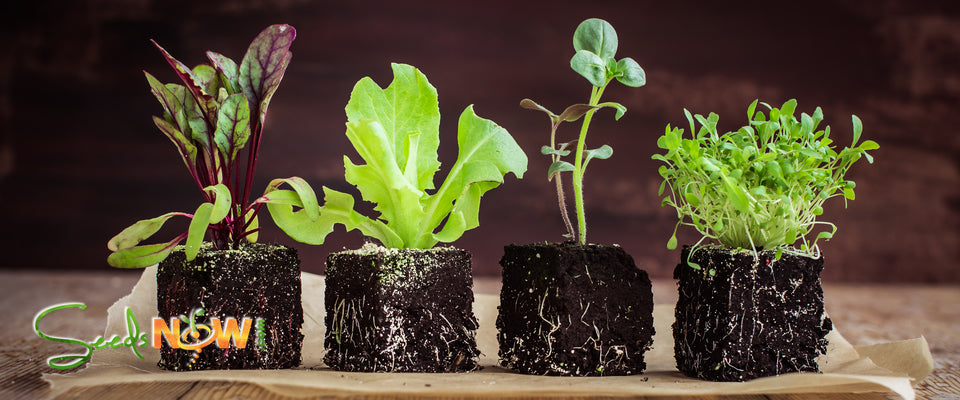
Pods are the easiest way to start your seeds - indoors or
outdoors.

- Organic milled Canadian peat and lime added for pH adjustment.
- Just add water to let the soil expand - then add your seeds - and watch them grow.
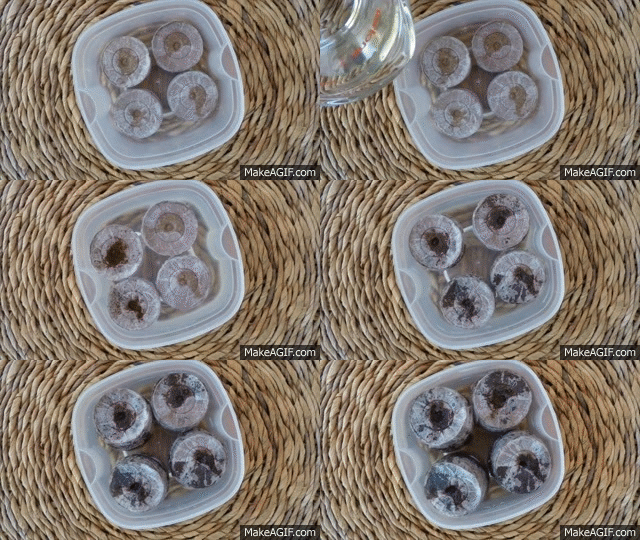
- When you start plants inside, you raise them to a certain size and then transplant them out into your garden (see transplanting).
- Starting plants inside is very rewarding. All you need to do is add water, add your seeds, and watch them grow.
- Makes seed starting so much easier!
- Provides shock-free transplantation into your garden, container, or pot.

Organic Seed Pods, Seed Starting Soil Pods, Biodegradable Soil Pods, Organic Garden Starter, Plant Starter Kit
Tags: Organic Seed Pods, Seed Starting Pods, Biodegradable Pods, Seed Starters, Garden Starter, Pellets for Seeds, Plant Starter Kit, Organic Gardening, Grow Pods, Seedling Soil Discs, Garden Starter, Seedling Pods, Natural Soil Starter
Organic Seed Pods are the perfect eco-friendly solution for starting your garden naturally and sustainably. These biodegradable soil pods are made with nutrient-rich organic materials, making them ideal for germinating seeds and encouraging strong, healthy plant growth from the very beginning.
These seed starting soil pods eliminate the mess and guesswork of traditional planting. Simply add water, insert your seeds, and watch them sprout. The pods expand when hydrated, creating the perfect environment for root development without the need for plastic trays or containers.
These plant starter kits are great for home gardeners, school gardening projects, or sustainable gift ideas. They're safe for the environment and perfect for teaching kids about how plants grow from seed to sprout.
Pods are the easiest way to start your seeds - indoors or outdoors.
- Organic milled Canadian peat and lime added for pH adjustment.
-
Sprouts/Microgreens - Kale, Red Russian seeds
From $499 USDUnit price /UnavailableDescription

Kale Red Russian Micro-Greens
- Really easy to grow.
- Just let them grow until you see the first set of true leaves.
- Perfect for a micro-green salad.
- Makes a great addition to many culinary dishes.
- These sprouts have a mildly sweet flavor.
- Day to Maturity | 3-6 days
- Really easy to grow.
-
Sprouts/Microgreens - Bean, Adzuki seeds
From $499 USDUnit price /UnavailableDescription
- Certified Kosher by Chabad House of Western Michigan.
- Certified Organic.
- The Adzuki Bean (Vigna angularis) has been grown in the Far East for centuries.
- Adzuki beans are one of Japan’s largest crops, with annual consumption of over 120,000 metric tons.
- Adzuki beans are often sprouted for only one day, mixed with other sprouts and called a "Crispy Mix" or "Crunchy Mix."
- They are commonly used throughout Asia in a variety of ways.
- Certified Kosher by Chabad House of Western Michigan.
-
Sprouts/Microgreens - Alfalfa seeds
From $499 USDUnit price /UnavailableDescription
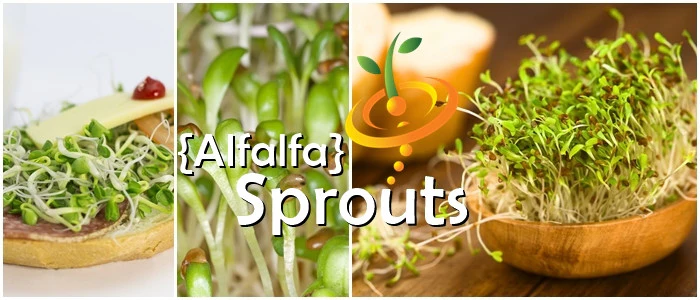
Organic alfalfa sprouts deliver nutrient-dense greens in just 5-7 days using simple indoor sprouting methods. These seeds germinate reliably in mason jars, sprouting trays, or dedicated sprouters without soil, making them ideal for year-round cultivation regardless of outdoor conditions. Alfalfa sprouts are rich in vitamins, minerals, and enzymes while remaining exceptionally low in calories, offering substantial nutritional returns from minimal space. The sprouting process requires only water, proper drainage, and consistent rinsing—no special equipment or gardening experience necessary. Certified organic seeds ensure chemical-free production from seed to harvest. Perfect for health-conscious growers seeking fresh, living foods with complete control over growing conditions. Enjoy crisp, tender sprouts in salads, sandwiches, and smoothies within days of starting your crop.
Organic
- Alfalfa is one of the healthiest and easiest sprouts you can grow!
- Extremely high in protein, calcium, plus other minerals and vitamins in the B group, vitamin C, vitamin E, and vitamin K.
- Alfalfa is extremely easy to grow.
- All organic. All natural.
- If you like Alfalfa sprouts, make sure to check out Red Clover sprouts.
- Looking for an All-in-1 kit? Check out this All-in-1 Seed Sprouting Kit + Mason Jar.

How to Grow Sprouts
The easiest method is to grow sprouts in a Mason jar. To provide plenty of fresh air, cover the top with the mesh screen.
Step One: Soaking
For a quart-sized jar, put 1 ½ to 2 tablespoons of small seeds (up to 1 cup if using larger seeds like green peas or garbanzo) in the sprouting jar. Cover top of jar with cloth or sprouting lid and rinse the seeds in warm (not hot) water. Drain and refill so that water is about an inch above the seeds. Let the seeds soak 8-12 hours (overnight). Protect from light by covering with a dish towel or placing in a cupboard.
Step Two: Rinsing
Rinse 2 to 3 times per day for 2 to 3 days. After thoroughly draining the rinse water, lay the jar on its side to spread out the seeds. Do not expose to light. After 2 to 3 days the sprouts should be filling up the jar.
Things to Remember:1. Rinse often (2-3 times/day).
2. Keep them moist, not wet.
3. Keep them at room temperature.
4. Give them air to breathe.
5. Don't grow too many in one container.
6. Keep them in a dark place.
- Alfalfa is one of the healthiest and easiest sprouts you can grow!
-
Sprouts/Microgreens - Barley Grass seeds
From $499 USDUnit price /UnavailableDescription

- Organic.
- Known as the the famous nutritious Super Green supplement.
- It is even more nutritious in the form of raw juice.
- Ideal for juicing.
- Can be ground up for Barley flour and bread.
- Extremely healthy and nutritious.
- Days to Harvest | Barley grass will be ready to harvest in appx. 6 to 10 days
- Organic.
-
Sprouts/Microgreens - Broccoli seeds
From $499 USDUnit price /UnavailableDescription

- An easy to grow sprout that is extremely nutritious.
- Broccoli sprouts are 10x - 100x higher in some cancer fighting compounds than the actual mature vegetable!
- Certified Organic.
- Days to Maturity | 2-3 days
- An easy to grow sprout that is extremely nutritious.
-
Sprouts/Microgreens - Clover, Red Crimson seeds
From $499 USDUnit price /UnavailableDescription
- Sweet mild flavor.
- Certified Organic.
- These sprouts are actually larger and more flavorful than alfalfa sprouts and make a great addition to sandwiches and salads.
- If you like Clover sprouts, make sure to check out Alfalfa sprouts.
Did you know? Clover contains high concentrations of isoflavones which are thought to have powerful anti-cancer properties. Clover flavor is a lot like alfalfa; mild and nutty. Sprouts last better if stored in the fridge. - Sweet mild flavor.
-
Sprouts/Microgreens - Fenugreek seeds
From $499 USDUnit price /UnavailableDescription
-
Sprouts/Microgreens - Pea, Green seeds
From $499 USDUnit price /UnavailableDescription
- Organic
- Ready to eat as a sprout just a soon as they pop.
- Sweet and delicious in salads and casseroles.
- Day to Maturity | 3-7 days
Follow SeedsNow.com's board Green Pea Sprouts on Pinterest. -
Sprouts/Microgreens - Mustard, Mizuna (Green) seeds
From $499 USDUnit price /UnavailableDescription
Mustard, Sprouts & Micro-Greens
- Mustard is a member of the crucifer family.
- Mustard greens are a popular dish in the Southern U.S. and are an excellent source of vitamins A and C.
- Mustard sprouts have a strong spicy flavor and are usually blended with alfalfa or clover sprouts.
Follow SeedsNow.com's board Mustard on Pinterest. - Mustard is a member of the crucifer family.
-
Sprouts/Microgreens - Radish, Classic seeds
From $499 USDUnit price /UnavailableDescription
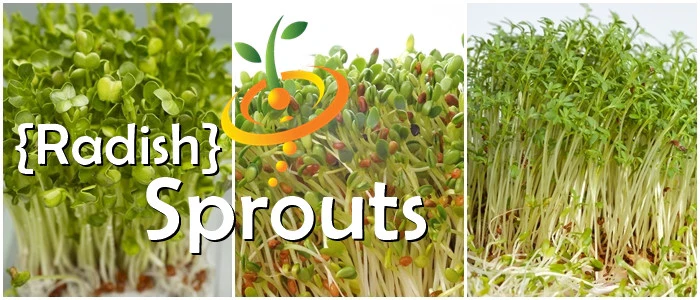 Radish microgreens deliver a peppery punch to salads, sandwiches, and garnishes while packing impressive nutritional density. These fast-growing shoots are ready to harvest in just 7-10 days, making them ideal for home growers seeking quick results. Rich in vitamins C and K, plus glucosinolates known for their potential health benefits, radish microgreens thrive in shallow trays with consistent moisture and indirect light. Simply soak seeds overnight, spread evenly on growing medium, and maintain humidity until sprouting. Their crisp texture and bold flavor make them a favorite among chefs and health-conscious home gardeners alike.
- Easy to grow - and - taste great.
- Radish sprouts have gained popularity in recent years.
- Certified Organic
Follow SeedsNow.com's board Radish on Pinterest. -
Sprouts/Microgreens - Rainbow Chard seeds
From $499 USDUnit price /UnavailableDescription
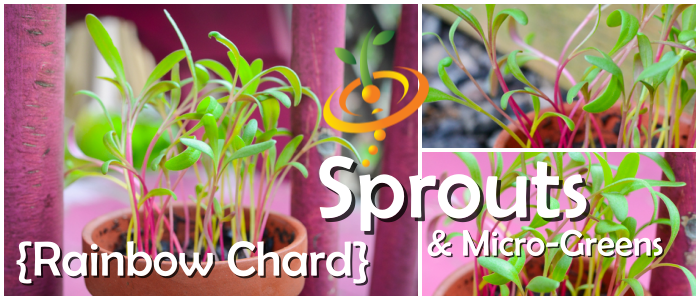
- Delicious
- Nutritious
- Beautiful colored sprouts ranging from red, pink, yellow, and orange
- Easy to grow
-
Sprouts/Microgreens - Cress seeds
From $499 USDUnit price /UnavailableDescription
Cress is one of the healthiest and most popular microgreens available. Perfect for gourmet salads and vegetarian dishes, these nutrient-dense sprouts are very easy and quick to grow, requiring minimal space. Ideal for home gardeners and culinary enthusiasts looking to add fresh, peppery greens to their kitchen.
Cress sprouts are remarkably simple to grow indoors year-round. Soak seeds for 2-4 hours, then spread them evenly on a damp growing medium like soil, coconut coir, or even a paper towel. Keep the medium consistently moist but not waterlogged, and place in indirect light. Sprouts are ready to harvest in 7-10 days when they develop their first true leaves. No special equipment needed—a shallow tray or plate works perfectly. Rinse daily if using the jar sprouting method for optimal growth and flavor.
- Cress is one of the healthiest and most popular microgreens available.
- Perfect for gourmet salads and many other vegetarian culinary creations.
- Very easy and quick to grow.
- Little space is required to grow cress.
See Cress Sprouts Recipes & Growing Tips on our Pinterest Board
Follow SeedsNow.com's board Cress Sprouts on Pinterest. - Cress is one of the healthiest and most popular microgreens available.
-
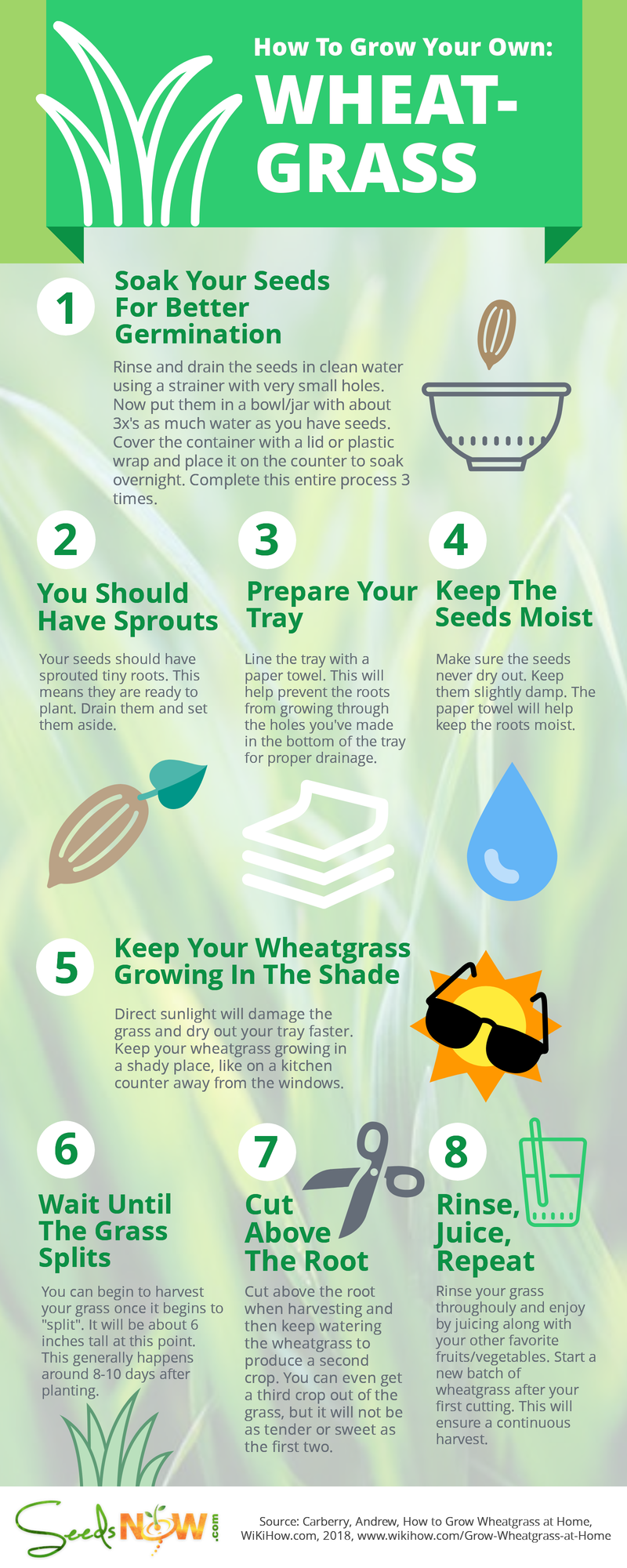
Sprouts/Microgreens - Wheat Grass seeds
From $499 USDUnit price /UnavailableDescription
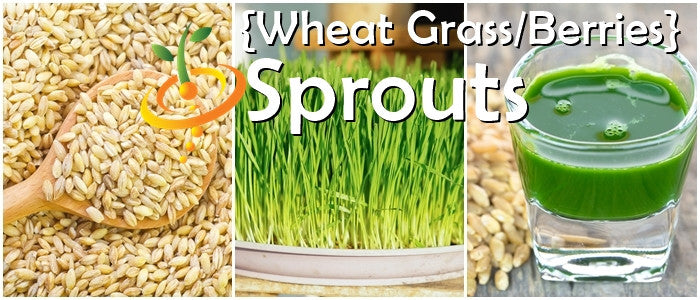 Wheat Grass
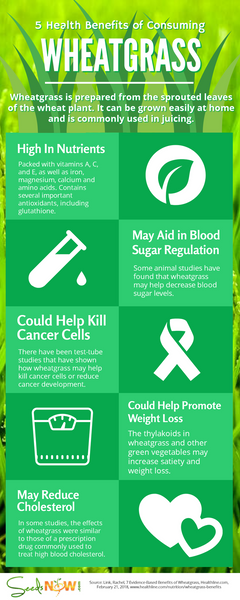
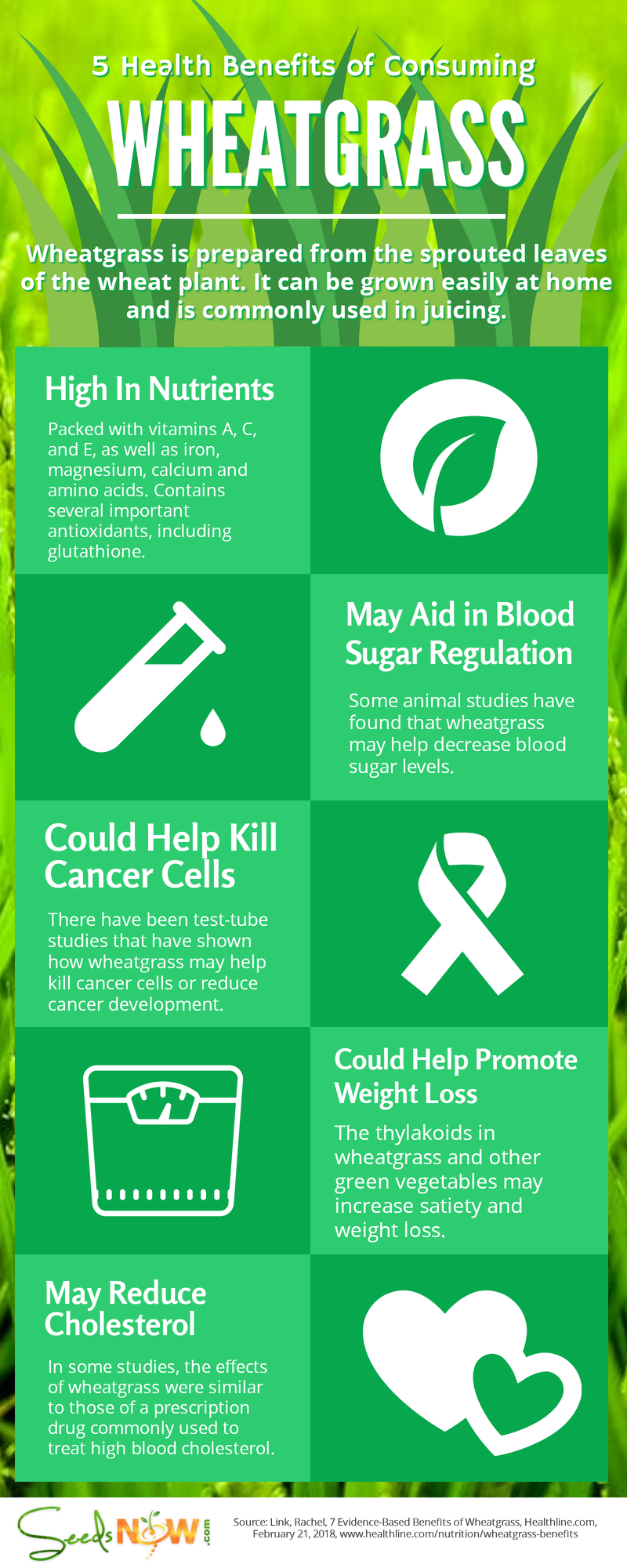
- Wheatgrass is the freshly sprouted first leaves of the common wheat plant, used as a food, drink, or dietary supplement. Like most plants, wheatgrass contains chlorophyll, amino acids, minerals, vitamins and enzymes. Claims about the health benefits of wheatgrass range from providing supplemental nutrition to having unique curative properties.
- Wheatgrass is an excellent source of dietary fiber, just like any whole grains.
- High in folic acid, protein, B-complex vitamins and vitamin E.
- The wheat sprouts are extremely rich in Vitamins A,B, C and E along with other minerals.
-
Day to Sprout | 2-3 days - The wheat grass will be ready to juice in appx. 7 to 10 days
Read: How to Sprout Wheat Berries at Home in a Mason Jar
Read: How to Grow Wheatgrass at Home *Without Soil*


SHIPPING NOTE: This item cannot be shipped to Canada.
- Wheatgrass is the freshly sprouted first leaves of the common wheat plant, used as a food, drink, or dietary supplement. Like most plants, wheatgrass contains chlorophyll, amino acids, minerals, vitamins and enzymes. Claims about the health benefits of wheatgrass range from providing supplemental nutrition to having unique curative properties.
-
Sprouts/Microgreens - Bean, Mung seeds
From $499 USDUnit price /UnavailableDescription
These delicious sprouts are popular and common as an integral part of Asian cuisine. Mung bean sprouts are quite thick and are crunchy with a nutty taste – mild and fresh. These can be served with salads, sprinkled as crunchy toppings, used in stir-fry, or simply enjoyed by themselves.
-
Sprouts/Microgreens - Lentils, Green seeds
From $499 USDUnit price /UnavailableDescription
-
Sprouts/Microgreens - Lentils, Red seeds
From $499 USDUnit price /UnavailableDescription
-
Wildflowers - Hummingbird & Butterfly Scatter Garden Seed Mix
From $499 USDUnit price /UnavailableDescription
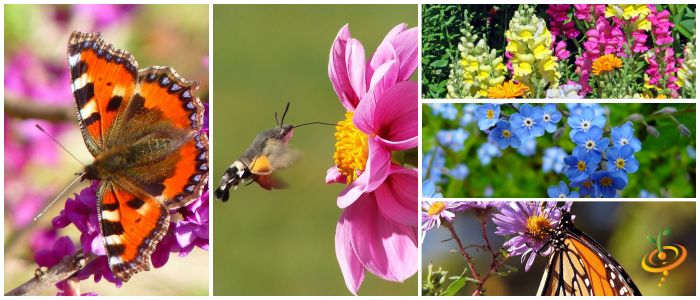
Includes a mix of the 23 of the most popular flower varieties known to attract Hummingbirds and Butterflies! Scatter this mix of seeds in your garden for the most beautiful assortment of flowers you've ever seen.
Wildflower establishment requires some important steps:
Site selection/preparation: It's important to address competition from weeds: pull, till, or use organic herbicides. If planting in the spring/summer you can wait for weeds to germinate, control and then plant the wildflower seeds.Seeding: You will want to have good seed to soil contact, broadcasting by hand is a good approach on small plot, may want to mix with an inert carrier, sand or other. Raking in and covering with soil 2-3 times seed thickness.Watering: During establishment for the first month, can be from rain in spring or supplement with irrigation.Timing: The best time to plant is in spring to early summer and even again in late fall.
This mix includes all of the following seed varieties:GENUS/ SPECIES
COMMON NAME
PLANT TYPE
PLANT HEIGHT (inches)
FLOWER COLORS
1. Asclepias tuberosa
Butterfly Milkweed
Perennial
24 to 36
Orange

2. Aquilegia caerulea
Mrs. Scott Elliot
Perennial
24 to 36
Yellow/Red/Violet/Blue

3. Antirrhinum tetra
Snapdragon
Annual
24 to 36
Lavender/Yellow/Pink/White

4. Callistephus chinensis
Aster
Annual
24 to 36
Blue/Pink/White/Purple

5. Cosmos bipinnatus
Cosmos Sensation Mix
Annual
36 to 60
White/Pink/Crimson/Rose

6. Cynoglossum amabile
Chinese Forget Me Not
Annual/
Biannual18 to 20
Blue

7. Delphinium consolida
Larkspur Giant Imperial Mix
Annual
12 to 26
White/Pink/Blue/Violet

8. Digitalis purpurea
Foxglove
Biannual/
Perrenial24 to 48
Purple/Cream

9. Gilia tricolor
Bird's Eyes
Annual
12 to 18
Lavender-White

10. Lavatera trimestris
Treemallow
Annual
24 to 48
White/Pink

11. Linaria maroccana
Toadflax
Annual
12 to 24
Pink/Yellow/Violet

12. Lobularia maritima
Alyssum, Carpet of Snow
Annual
8 to 16
White

13. Lychnis chalcedonica
Maltese Cross
Perennial
24 to 36
Scarlet

14. Mirabilis jalapa
Four O'clock
Tender
Perennial12 to 24
Red/Pink/Yellow.White

15. Monarda citriodora
Lemon Mint
Annual
12 to 24
Lavender/White

16. Nicotiana alata
Tobacco Plant
Annual
12 to 24
Red/White/Green/Yellow

17. Papaver rhoeas
Red Corn Poppy
Annual
12 to 30
Red
18. Penstemon strictus
Gloxinia Penstemon
Perennial
24 to 36
Blue

19. Salvia coccinea
Scarlet Sage
Annual/
Perennial12 to 24
Red

20. Silene armeria
Catchfly
Annual/
Biannual16 to 22
Pink

21. Tagetes erecta
Marigold Crackerjack
Annual
24 to 36
Yellow/Orange

22. Tropaeolum majus
Nasturtium Dwarf Jewel
Annual
12 to 36
Red/Yellow/Orange/Pink

23. Zinnia elegans
Zinnia
Annual
12 to 36
White/Purple/Yellow/Orange/Red
-
Wildflowers - Annual Cut Flower Scatter Garden Seed Mix
From $499 USDUnit price /UnavailableDescription
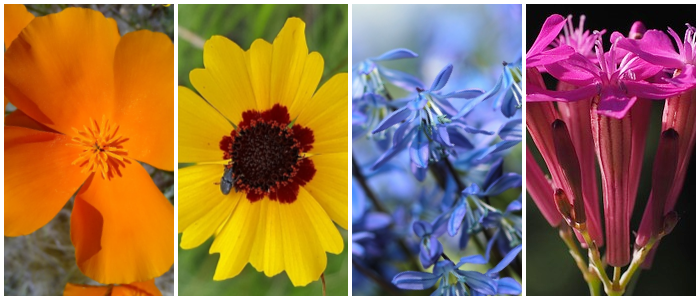 Includes a mix of 25 popular annual flower varieties that will produce a beautiful assortment of flowers suitable for cutting. The mix includes many of the flowers found in floral stores. This annual flower mix will blossom all-year-long creating a bountiful source of flowers.
 Scatter this mix of seeds in your garden for the most beautiful assortment of flowers you've ever seen.
Wildflower establishment requires some important steps:- Site selection/preparation: It's important to address competition from weeds: pull, till, or use organic herbicides. If planting in the spring/summer you can wait for weeds to germinate, control and then plant the wildflower seeds.
- Seeding: You will want to have good seed to soil contact, broadcasting by hand is a good approach on small plot, may want to mix with an inert carrier, sand or other. Raking in and covering with soil 2-3 times seed thickness.
- Watering: During establishment for the first month, can be from rain in spring or supplement with irrigation.
- Timing: The best time to plant is in spring to early summer and even again in late fall.
This mix includes all of the following seed varieties:GENUS/SPECIES
COMMON NAME
TYPE
HEIGHT
COLOR

Callistephus chinensis
Aster
A
12 to 36
Blue/Pink/White/Purple

Calendual officinalis
Pot Marigold
A
12 to 24
Yellow/Orange/Cream
Centaurea cyanus
Bachelor Button, Polka Dot Mix
A
12 to 36
Mix

Clarkia amoena
Godetia
A
8 to14
Pink/White
Clarkia elegans
Clarkia
A
18 to 30
Pink/Lavender

Coreopsis tinctoria
Plains Coreopsis
A
12 to 36
Yellow-Maroon

Cosmos bipinnatus
Cosmos, Dwarf Sensation
A
36 to 60
White/Pink/Crimson/Rose

Cynoglossum firmament
Chinese Forget Me Not
A/B
18 to 24
Blue

Delphinium ajacis
Larkspur
A
12 to 36
White/Pink/Blue/Violet

Dimorphotheca aurantiaca
African Daisy
A
8 to16
Orange/Salmon/White

Eschscholzia californica
Poppy, Mission Bells
TP
12 to 18
Yellow/Orange

Gaillardia pulchella
Annual Gaillardia
A
12 to 24
Yellow-Red

Gypsophila elegans
Baby's Breath
A
8 to 18
White

Helianthus annuus
Sunflower
A
24 to 72
Yellow

Helichrysum monstrosum
Strawflower mixed
A
24 to 36
Yellow/White/Red/Pink

Iberis umbellata
Candytuft
A
12 to 18
White/Pink/Violet

Lavateria trimestris mix
Tree mallow
A
24 to 48
White/Pink

Lobularia maritima
Alyssum, tall Sweet
TP
8 to 16
White

Oenotheria lamarckiana
Evening Primrose
B/P
24 to 60
Yellow

Papaver rhoeas
Shirley Poppy
A
12 to 30
White/Pink/red

Phacelia campanularia
California Bluebells
A
8 to 20
Blue

Rubeckia hirta
Black Eyed Susan
A/B/P
12 to 36
Yellow

Silene armeria
Catchfly
A/B
16 to 22
Pink

Tagetes erecta
Marigold
A
12 to 16
Yellow/Orange/Maroon

Zinnia elegans
Zinnia
A
12 to 36
White/Purple/Yellow/Orange.Red
A-Annual
75%
B-Biennial
18%
TP-Tender Perennial
7%
-
Wildflowers - Deer Resistant Scatter Garden Seed Mix
From $499 USDUnit price /UnavailableDescription
 Includes a mix of the 22 of the most popular flower varieties that deer are known to stay away from. Scatter this mix of seeds in your garden and keep the deer away.Wildflower establishment requires some important steps:- Site selection/preparation: It's important to address competition from weeds: pull, till, or use organic herbicides. If planting in the spring/summer you can wait for weeds to germinate, control and then plant the wildflower seeds.
- Seeding: You will want to have good seed to soil contact, broadcasting by hand is a good approach on small plot, may want to mix with an inert carrier, sand or other. Raking in and covering with soil 2-3 times seed thickness.
- Watering: During establishment for the first month, can be from rain in spring or supplement with irrigation.
- Timing: The best time to plant is in spring to early summer and even again in late fall.
This mix includes all of the following seed varieties:GENUS/SPECIES
COMMON NAME
TYPE
HEIGHT
COLOR

Achillea millefolium
Yarrow
P
12 to 36
White

Aquilegia caerulea
Columbine
p
24 to 36
Yellow'/Red/Violet/Blue

Centaurea cyanus
Bachelor Buttons
A
12 to 36
Blue or Mix

Chrysanthemum maximum
Shasta Daisy
P
16 to 24
White

Clarkia amoena
Godetia
A
8 to 14
Pink/White

Coreopsis lanceolata
Lance Leaf Coreopsis
P
18 to 36
Yeloow

Delphinium consolida
Larkspur
A
12 to 36
Whie/Pink/Blue/Violet

Digitalis purpurea
Foxglove
B/P
24 to 48
Purple/Cream

Echinacea purpurea
Purple Coneflower
P
24 to 36
Purple

Eschscholzia californica
California Poppy
TP
12 to 18
Yellow/Orange

Gaillardia aristata
Blanketflower
P
18 to 30
Yellow-Red

Iberis umbellata
Candytuft
A
12 to 18
White/Pink/Violet

Liatris spicata
Gayfeather
P
24 to 48
Purple

Lupinus perennis
Lupine
P
12 to 36
Blue

Monarda citriodora
Lemon Mint
A
12 to 24
Lavander/White

Papaver rhoeas
Red shirley poppy
A
12 to 30
Red

Papaver rhoeas
Mixed Shirley Poppy
A
12 to 30
White/Pink/Red

Ratibida columnifera
Red Prairie Coneflower
B/P
12 to 36
Red/Yellow

Ratibida columnifera
Yellow Prairie Coneflower
B/P
12 to 36
Yellow

Rudbeckia hirta
Black Eyed Susan
A/B/P
12 to 36
Yellow

Salvia coccinea
Scarlet Sage
A/P
12 to 24
Red

Viscaria occulata
Soapwort
A
9 to 12
Pink
Annual
41%
PERENNIAL
59%
-
Wildflowers - Lupine Scatter Garden Seed Mix
From $499 USDUnit price /UnavailableDescription
 Includes a mix of 5 popular lupine flower varieties and colors. Scatter this mix of seeds in your garden and enjoy a beautiful assortment of lupine flowers.Wildflower establishment requires some important steps:- Site selection/preparation: It's important to address competition from weeds: pull, till, or use organic herbicides. If planting in the spring/summer you can wait for weeds to germinate, control and then plant the wildflower seeds.
- Seeding: You will want to have good seed to soil contact, broadcasting by hand is a good approach on small plot, may want to mix with an inert carrier, sand or other. Raking in and covering with soil 2-3 times seed thickness.
- Watering: During establishment for the first month, can be from rain in spring or supplement with irrigation.
- Timing: The best time to plant is in spring to early summer and even again in late fall.
This mix includes all of the following seed varieties:GENUS/SPECIES
COMMON NAME

Lupinus densiflora
Golden Yellow

Lupinus hartwegii
Dwarf Pixie Delight

Lupinus perennis
Perennial Lupine

Lupinus polyphyllus
Russel Lupine

Lupinus succulentis
Arroyo Lupine
-
Wildflowers - Cosmos Flower Scatter Garden Seed Mix
From $499 USDUnit price /UnavailableDescription
Includes a mix of 7 popular cosmos flower varieties. Scatter this mix in your garden and enjoy a beautiful assortment of cosmos flowers!
Wildflower establishment requires some important steps:
- Site selection/preparation: It's important to address competition from weeds: pull, till, or use organic herbicides. If planting in the spring/summer you can wait for weeds to germinate, control and then plant the wildflower seeds.
- Seeding: You will want to have good seed to soil contact, broadcasting by hand is a good approach on small plot, may want to mix with an inert carrier, sand or other. Raking in and covering with soil 2-3 times seed thickness.
- Watering: During establishment for the first month, can be from rain in spring or supplement with irrigation.
- Timing: The best time to plant is in spring to early summer and even again in late fall.
This mix includes all of the following seed varieties:GENUS/SPECIES
COMMON NAME
Cosmos bippinatus
Cosmos, Sensation Mix
Cosmos bippinatus
Dazzler
Cosmos bippinatus
Gloria
Cosmos bippinatus
Picotee
Cosmos bippinatus
Pinkie
Cosmos bippinatus
Purity
Cosmos sulphureus
Sulphur Cosmos
-
Wildflowers - Coneflower Scatter Garden Seed Mix
From $499 USDUnit price /UnavailableDescription
 Includes a mixture of 6 popular coneflower varieties. Scatter this mix in your garden and enjoy a beautiful assortment of coneflowers!
Wildflower establishment requires some important steps:
- Site selection/preparation: It's important to address competition from weeds: pull, till, or use organic herbicides. If planting in the spring/summer you can wait for weeds to germinate, control and then plant the wildflower seeds.
- Seeding: You will want to have good seed to soil contact, broadcasting by hand is a good approach on small plot, may want to mix with an inert carrier, sand or other. Raking in and covering with soil 2-3 times seed thickness.
- Watering: During establishment for the first month, can be from rain in spring or supplement with irrigation.
- Timing: The best time to plant is in spring to early summer and even again in late fall.
This mix includes all of the following seed varieties:GENUS/SPECIES
COMMON NAME

Echinacea purpurea
Purple Coneflower

Echinacea palladia
Pale Purple Coneflower

Rudbeckia amplexicaulis
Clasping Coneflower

Ratibida columnifera
Red Mexican Hat

Ratibida columnifera
Yellow Prairie Coneflower

Ratibida pinnata
Greyheaded Coneflower




 Includes a mix of 25 popular annual flower varieties that will produce a beautiful assortment of flowers suitable for cutting. The mix includes many of the flowers found in floral stores. This annual flower mix will blossom all-year-long creating a bountiful source of flowers.


 Includes a mix of 5 popular lupine flower varieties and colors. Scatter this mix of seeds in your garden and enjoy a beautiful assortment of lupine flowers.


 Includes a mixture of 6 popular coneflower varieties. Scatter this mix in your garden and enjoy a beautiful assortment of coneflowers!


🌱 Featured Collections
View all


Earn -&- redeem BeetCOINS™ 💰 for seriously special rewards! Learn more about rewards
... continue shopping!
🔥 Trending Now
View all-
Cilantro/Coriander, Slow-Bolt (splits) seeds
From $399 USDUnit price /Unavailable -

*FREE GIFT* ALL-IN-1 SEED STARTER KIT!
$000 USDUnit price /Unavailable -
*FREE* ORGANIC GARDENING GROW GUIDES eBOOK
$000 USDUnit price /Unavailable -
*Seed Starting Soil Pods* (ORGANIC)
From $499 USDUnit price /Unavailable -
Squash (Summer) - Black Beauty Zucchini seeds
From $299 USDUnit price /Unavailable -
Pepper (Sweet) - California Wonder seeds
From $299 USDUnit price /Unavailable -
Carrot - Tendersweet (7" Long) seeds
From $299 USDUnit price /Unavailable -
Pepper (Hot) - Jalapeño, Early Green 🔥🔥 seeds
From $299 USDUnit price /Unavailable -
From $399 USDUnit price /Unavailable
-

Lavender, English Flower seeds
From $399 USDUnit price /Unavailable -
Arugula - Roquette (Rocket) seeds
From $299 USDUnit price /Unavailable -
Basil, Italian Large Leaf seeds
From $099 USDUnit price /Unavailable -
From $399 USDUnit price /Unavailable
-
From $399 USDUnit price /Unavailable
-
From $299 USDUnit price /Unavailable
-
From $399 USDUnit price /Unavailable


🪴 Essential Supplies -&- More
View all-
*FREE* ORGANIC GARDENING GROW GUIDES eBOOK
$000 USDUnit price /Unavailable -
 From $199 USDUnit price /Unavailable
 -
Epsom Salts Soil Fertilizer (THE BEST!)
From $299 USDUnit price /Unavailable -
*Seed Starting Soil Pods* (ORGANIC)
From $499 USDUnit price /Unavailable -
Seed Storage Vault Small (.57 Liters/5.5" tall)
$999 USD$1299Unit price /Unavailable -
Seed Storage Vault Xtra-Small (.29 liters/3.75" tall)
$999 USDUnit price /Unavailable -
Seed Storage Vault Medium (1.3 liters/8" tall)
$1499 USD$1999Unit price /Unavailable -
Seed Storage Vault Large (2.5 liters/10.25" tall)
$2599 USD$2999Unit price /Unavailable -
Seed Storage Vault Xtra-Large (3.8 liters/10.25" tall)
$3899 USDUnit price /Unavailable -
All-in-One MEGA SEED BANK for Survival w/LARGE Seed Storage Vault
$24999 USD$29900Unit price /Unavailable


Get this month's seeds kit for FREE w/any-size order!
INCLUDES: Organic indoor seed starting soil pod + seeds of the month + plant label marker + instructions/grow guides


We want everyone to be successful growing their own sustainable organic vegetable garden. We created this Organic Gardening Grow Guides eBook ... and we're giving it away - for FREE! This eBook includes absolutely everything you need to know --- seed-to-harvest!