Violet is an Asiatic type hard neck. Bulbs are white colored with purple streaks. It produces big bulbs with 10-12 large cloves. Flavor tends to be slightly spicy.
By Price: Lowest to Highest - Gourmet Culinary Herb Seed Collection


Basil, Cinnamon (Mexican Basil) seeds
From $099 USDUnit price /UnavailableDescription
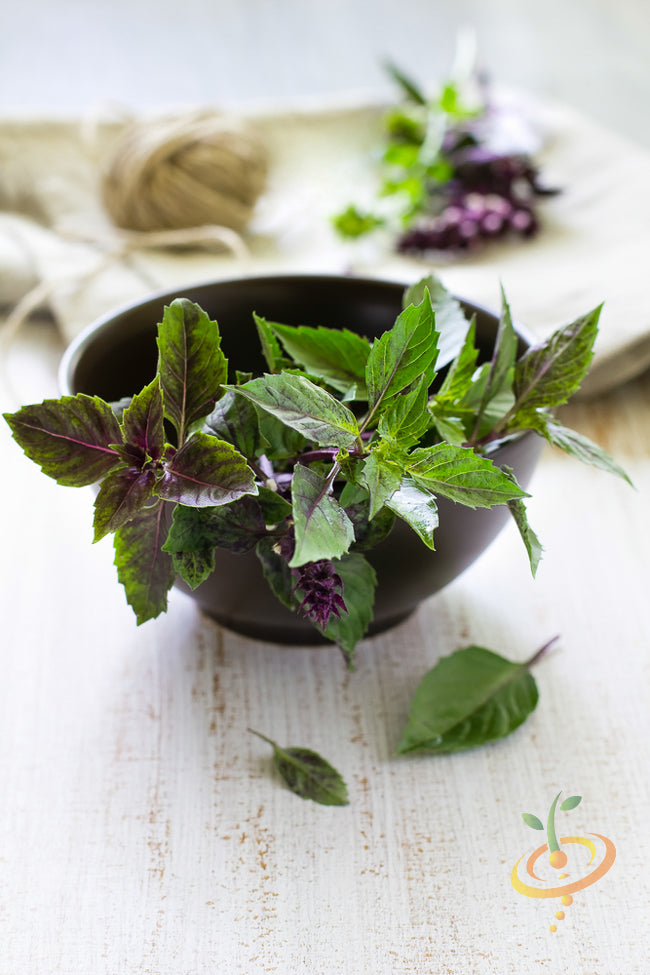
Cinnamon Basil, also called Mexican Basil, has glossy, deep green leaves that turn reddish at the tips when mature, and dark cinnamon-colored stems. Its warm, sweet cinnamon-anise flavor is especially nice in ham and pork dishes, apple pie and other desserts, and kombucha.
By far the most popular variety and possibly one of the most fragrant, this basil grows easily. Its aroma will remind you of sweet cinnamon and it is popular for use in hot drinks and paired with fresh fruit.
This sweet basil is exotic and has dark green leaves with purplish-red stems and purple blooms. It's spicy and has a cinnamon-like taste and scent. If you like making homemade potpourris or dried flower arrangements try adding some cinnamon basil!The violet flower spikes make an unusual garnish or addition to salads. Harvest the leaves and stems from the top part of the plant, and pinch off edible flower buds as they appear, which prevents the leaves from turning bitter, and signals the plant to branch out and grow more leaves, making a bushier plant.
The more you harvest, the more it grows!
- Cinnamon-anise flavor
- Tons of medicinal benefits!
- Good for indoor gardens
- Good for containers
As a medicinal herb, Basil has been used internally to treat anxiety, colds, colic, cough, depression, diarrhea, fever, flatulence, flu, indigestion, insomnia, intestinal parasites and worms, exhaustion, gastric pain, gonorrhea, lactation problems, migraine headache, nausea, stomach cramps, sore throat, and vomiting, and externally to treat acne, insect bites and stings, loss of smell, skin problems, snake bites.
⚠️ Do not use medicinally while pregnant.
⚠️ Medicinal properties are presented as information only, and are not a recommendation or prescription for use. Consult a medical professional before using any herb medicinally.
Plant Basil in your garden to attract hummingbirds, pollinators, and other beneficial insects.
Basil is also know to repel aphids, asparagus beetles, cabbage moths, cabbage white butterfly, cabbage worms, carrot rust fly, flies, maggots, mice, mosquitoes, spider mites, thrips, and tomato hornworms!
Shop all Basil Seeds Shop Good Companion Plants for Basil 📚 Grow Guide: Basil Health Benefits of Cinnamon Basil
Cinnamon basil is a must have, medicinal herb. It offers anti-inflammatory benefits and can relieve symptoms of arthritis! If you suffer from allergies, diabetes, colds, the flu, or infertility, some would swear by the benefits of consuming cinnamon basil and how it's improved their health. It is even used in the treatment of some cancers. It naturally boosts your immune system and is a known anti-bacterial and anti-viral. Are you growing this yet?...because you should be!
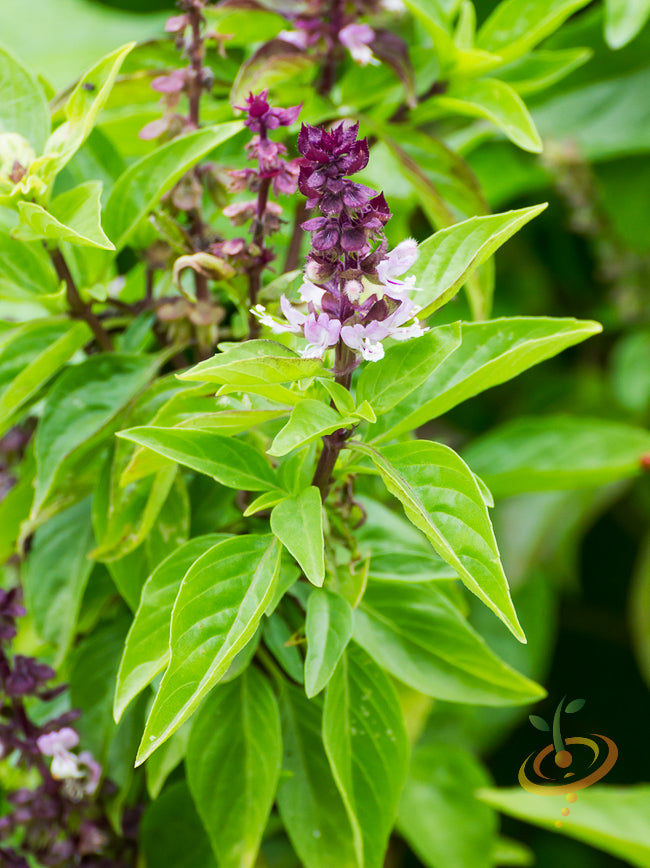
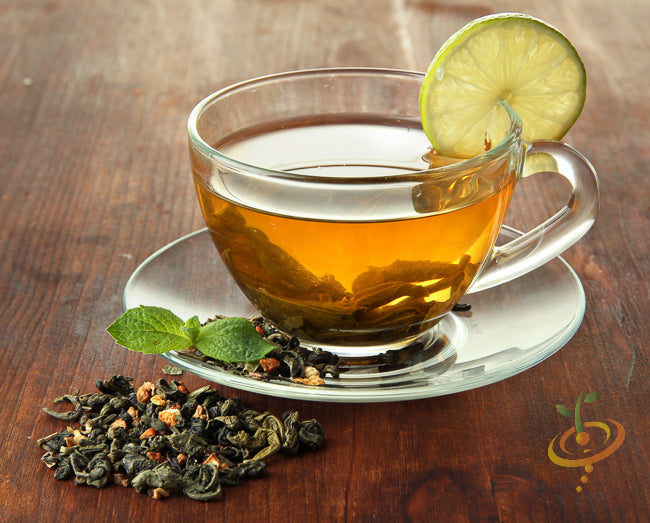
Ways to Consume Cinnamon BasilUse this exotic and fragrant basil in any recipe that calls for basil. The sweet flavor is great when paired with other fruity herbs. Pick the leaves when small and tender and use them in your favorite recipes or put them in bottles of olive oil to make cinnamon flavored oil. Cinnamon basil pairs harmoniously with apple pie filling, apple sauce, pork or ham dishes. Add frozen basil leaves to soups or sauces. Cinnamon basil can also be used to make refreshing teas, hot or cold!

See Basil Recipes & Growing Tips on our Pinterest Board
Shop all Basil Seeds Shop Good Companion Plants for Basil 📚 Grow Guide: Basil -
From $099 USDUnit price /Unavailable
Description
Dark Opal Purple Basil is a dark, fragrant beauty with its glossy, deep black-purple leaves that shimmer with iridescence in bright light, plum-colored stems, and edible violet flower spikes that make a spectacular garnish. A 1962 All-America Selections Winner! This annual basil plant produces extremely fragrant dark purple leaves. It can be used as a garnish or to make flavored vinegars. This basil drys excellently and is very easy to grow. Gardening in a small space or wanting to use a container? This variety grows great in them!Use it to add sweet, intense anise flavor and a dreamy purple color to pesto or bruschetta, or mix it into a moody Caprese salad with Black Krim Tomatoes.
Harvest the leaves and stems from the top part of the plant, and pinch off edible flower buds as they appear, which prevents the leaves from turning bitter, and signals the plant to branch out and grow more leaves, making a bushier plant.
The more you harvest, the more it grows!
- Sweet, intense anise flavor
- Slow to bolt (flower)
- 1962 All-America Selections (AAS) Winner
- Good for containers
- Tons of medicinal benefits!
As a medicinal herb, Basil has been used internally to treat anxiety, colds, colic, cough, depression, diarrhea, fever, flatulence, flu, indigestion, insomnia, intestinal parasites and worms, exhaustion, gastric pain, gonorrhea, lactation problems, migraine headache, nausea, stomach cramps, sore throat, and vomiting, and externally to treat acne, insect bites and stings, loss of smell, skin problems, snake bites.
⚠️ Do not use medicinally while pregnant.
⚠️ Medicinal properties are presented as information only, and are not a recommendation or prescription for use. Consult a medical professional before using any herb medicinally.
Plant Basil in your garden to attract hummingbirds, pollinators, and other beneficial insects.
Basil is also know to repel aphids, asparagus beetles, cabbage moths, cabbage white butterfly, cabbage worms, carrot rust fly, flies, maggots, mice, mosquitoes, spider mites, thrips, and tomato hornworms!

What is Dark Opal Purple Basil?
This sweet and very popular variety of basil has gorgeous purple-black glossy foliage and a delicious aroma. It's eye catching and a beautiful, colorful garden plant. This basil produces small to medium sized, tender leaves. It is slow to bolt and grows at a steady pace. The dark purple has a green metallic undertone or sheen and in bright light it can appear flat and open.
Health Benefits of Dark Opal Purple BasilDark Opal Purple Basil has a variety of medicinal benefits and has been known to improve digestive functions, treat acne and insect bites, improve nausea, and work as a sedative for muscle spasms and cramps.
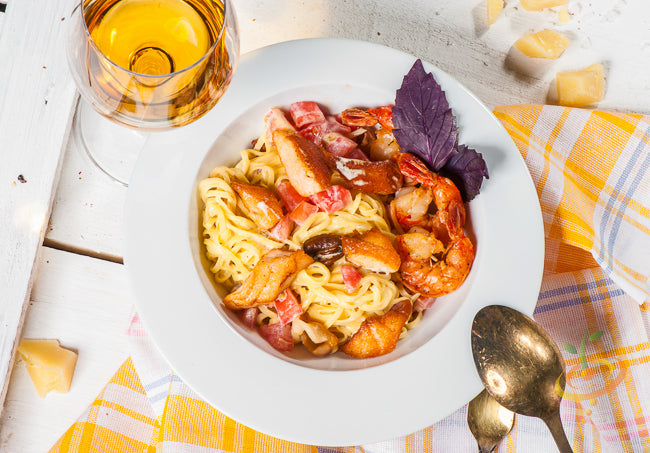
Ways to Consume Dark Opal Purple BasilLike many basil varieties, Dark Opal Purple Basil has a degree of licorice flavor, and it is used in the culinary world as an attractive garnish with good flavor. Use this herb fresh or dried and even frozen. It works wonderfully in salads and on sandwiches. The uses for this herb are endless and everyone should take advantage of this fresh and spicy leaf.
See Basil Recipes & Growing Tips on our Pinterest Board
Shop all Basil Seeds Shop Good Companion Plants for Basil 📚 Grow Guide: Basil -
Basil, Genovese (Sweet Basil) seeds
From $099 USDUnit price /UnavailableDescription
Genovese Basil, also called Sweet Basil, has large, tender, fragrant leaves and sweet, spicy anise flavor. The best basil for pesto. The flower spikes dotted with tiny white edible flowers make a delicate garnish or salad addition. This heat-loving herb is a reliable producer and all-around great Italian basil.
Genovese Basil is a classic! It's prized for being sweet with undertones of a spicy flavor. You can't beat its aroma. These plants grow anywhere from 18"-24" inches and is the variety of choice for making pesto and adding to pizzas.Use it in pesto, pasta and pizza sauce, Caprese salad, antipasto, curries, cocktails, smoothies, dressing, herb butter, oil, vinegar, and herbal tea.
Harvest the leaves and stems from the top part of the plant, and pinch off edible flower buds as they appear, which prevents the leaves from turning bitter, and signals the plant to branch out and grow more leaves, making a bushier plant.
The more you harvest, the more it grows!
- Sweet and spicy
- Grows 2'-3' tall
- Besto for pesto
- Good for containers
- Tons of medicinal benefits!
As a medicinal herb, Basil has been used internally to treat anxiety, colds, colic, cough, depression, diarrhea, fever, flatulence, flu, indigestion, insomnia, intestinal parasites and worms, exhaustion, gastric pain, gonorrhea, lactation problems, migraine headache, nausea, stomach cramps, sore throat, and vomiting, and externally to treat acne, insect bites and stings, loss of smell, skin problems, snake bites.
⚠️ Do not use medicinally while pregnant.
⚠️ Medicinal properties are presented as information only, and are not a recommendation or prescription for use. Consult a medical professional before using any herb medicinally.
As a companion plant, it attracts hummingbirds, pollinators, and beneficial insects, and repels asparagus beetles, cabbage moths, cabbage white fly, cabbage worms, carrot rust fly, flies, maggots, mice, mosquitoes, spider mites, thrips, and tomato hornworms.
Shop all Basil Seeds Shop Good Companion Plants for Basil 📚 Grow Guide: Basil 
What is Genovese Basil?
The most commonly used basil variety for making pesto, you can harvest these leaves as soon as they are large enough to consume. Genovese basil is also known as "Sweet Basil" and a common ingredient to all Italian dishes. The leaves are spoon shaped, glossy and a dark green shade. It grows best in organic-rich and well drained soil and is an easy to grow annual herb that thrives in areas that remain above 50 degrees Fahrenheit.
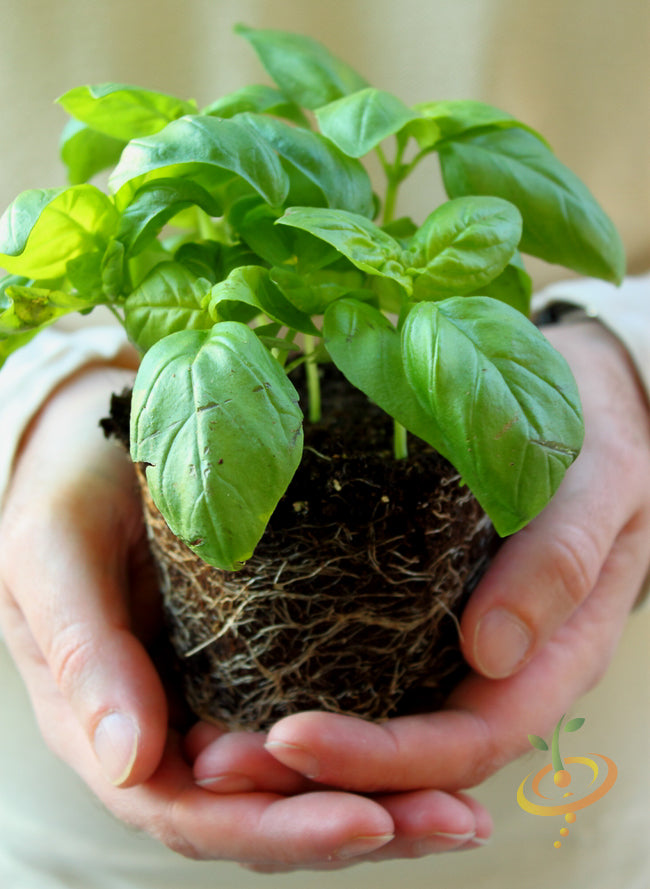
Health Benefits of Genovese BasilGenovese basil is a known health tonic for expecting mothers and when mixed with tea it increases lactation in mothers. It is also a nerve tonic and young children are sometimes encouraged to chew on the leaves of basil because it stimulates brain cells and can increase memory.

Ways to Consume Genovese BasilThe most popular use is in italian dishes and sauces, especially in genovese sauce and pesto. Genovese Basil goes great in caprese salads and on raw tomatoes for a light, healthy "summery" treat. Mix basil leaves with olive oil and freeze in ice-cube trays for flavored oils when cooking.
See Basil Recipes & Growing Tips on our Pinterest Board
Shop all Basil Seeds Shop Good Companion Plants for Basil 📚 Grow Guide: Basil  From $099 USDUnit price /Unavailable
Description
Enjoy some of our most popular varieties of Basil Herbs. This is a special blend of basil varieties we carry, sure to be a show stopper! You'll enjoy a wide variety of Basil plants with incredible fragrance and great flavors! Very easy to grow and extremely popular.
Best Seller!
See Basil Recipes & Growing Tips on our Pinterest Board:
Follow SeedsNow.com's board Basil on Pinterest.
Shop all Basil Seeds Shop Good Companion Plants for Basil 📚 Grow Guide: Basil 
Basil, Italian Large Leaf seeds
From $099 USDUnit price /UnavailableDescription
Italian Large Leaf Basil has soft, crinkled, bright green 2"-4" leaves, and a sweeter flavor than the Genovese Basil.Aromatic and delicious, use it to flavor herbal tea, herb butter, oil, vinegar, pasta and pizza sauce, antipasto, smoothies, curries, cocktails, Caprese salad, dressing, and pesto. The edible flower spikes make a beautiful garnish. Reliable producer and all-around great Italian basil.
Harvest the leaves and stems from the top part of the plant, and pinch off edible flower buds as they appear, which prevents the leaves from turning bitter, and signals the plant to branch out and grow more leaves, making a bushier plant.
The more you harvest, the more it grows!
- Sweet and spicy with less clove
- Genovese type
- Grows 1'-2' tall
- Good for containers
- Tons of medicinal benefits!
As a medicinal herb, Basil has been used internally to treat anxiety, colds, colic, cough, depression, diarrhea, fever, flatulence, flu, indigestion, insomnia, intestinal parasites and worms, exhaustion, gastric pain, gonorrhea, lactation problems, migraine headache, nausea, stomach cramps, sore throat, and vomiting, and externally to treat acne, insect bites and stings, loss of smell, skin problems, snake bites.
YIELD Do not use medicinally while pregnant.
YIELD Medicinal properties are presented as information only, and are not a recommendation or prescription for use. Consult a medical professional before using any herb medicinally.
As a companion plant, Basil attracts hummingbirds, pollinators, and beneficial insects, and repels asparagus beetles, cabbage moths, cabbage white butterfly, cabbage worms, carrot rust fly, flies, maggots, mice, mosquitoes, spider mites, thrips, and tomato hornworms.
Shop all Basil Seeds Shop Good Companion Plants for Basil 📚 Grow Guide: Basil 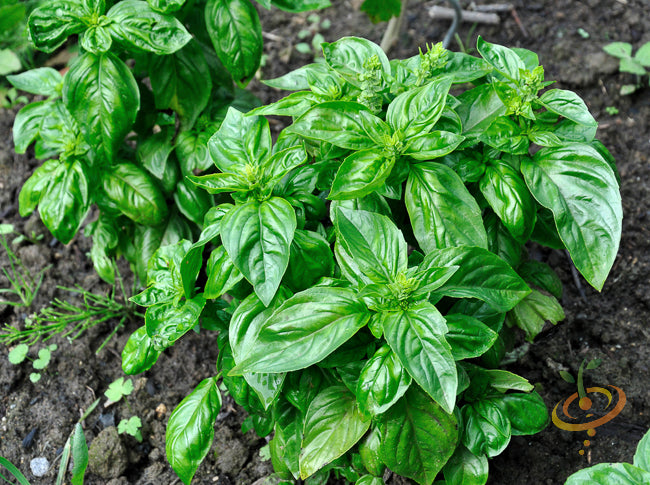
The Italian Large Leaf Basil plant will produce medium to large leaves that can measure up to 4" long! It is of heirloom variety and is extremely fragrant and used widely in the culinary industry. If you're a lover of basil, this would be a good variety to plant in your garden.

What is Italian Large Leaf Basil?
Italian Large Leaf Basil is an annual plant that will produce edible and fragrant leaves, flowers, and continue to put off a few more leaves through the process of ending it's life cycle. This basil grows well in "filtered light" (meaning near a bright window or under a tree), and it grows best in 50-90 degree weather. Warm, but not too warm.
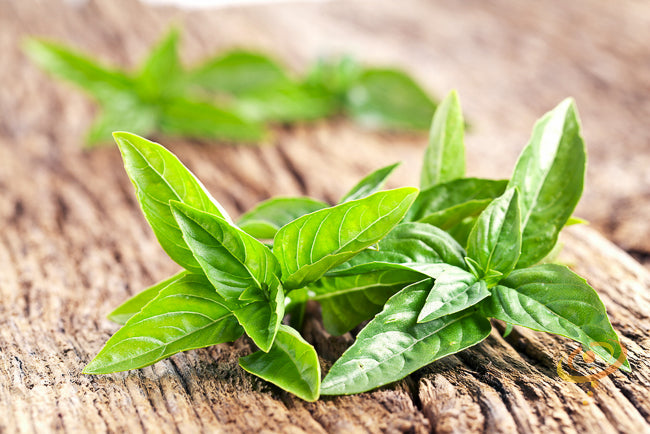
Health Benefits of Italian Large Leaf BasilItalian Large Leaf Basil has anti-bacterial properties and anti-inflammatory effects. It's been known to help people with inflammatory health problems like arthritis or IBS. Basil also contains properties that mimic food preservatives so it makes good sense to try and include more basil into the foods you prepare at home. Basil will help naturally preserve them so they'll be safer, longer. Basil also contains all the good stuff needed for better cardiovascular health.
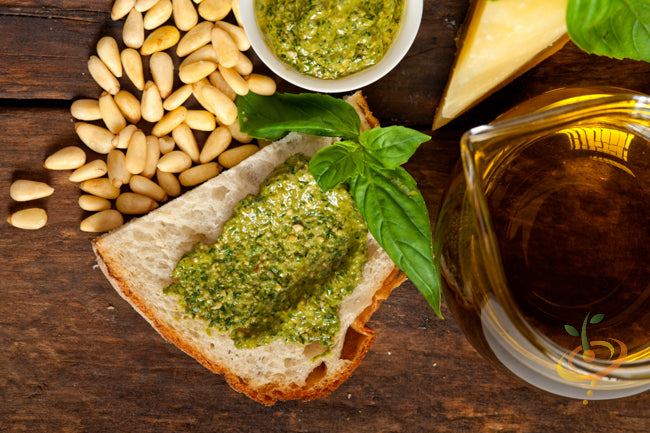
Ways to Consume Large Leaf Italian Basil
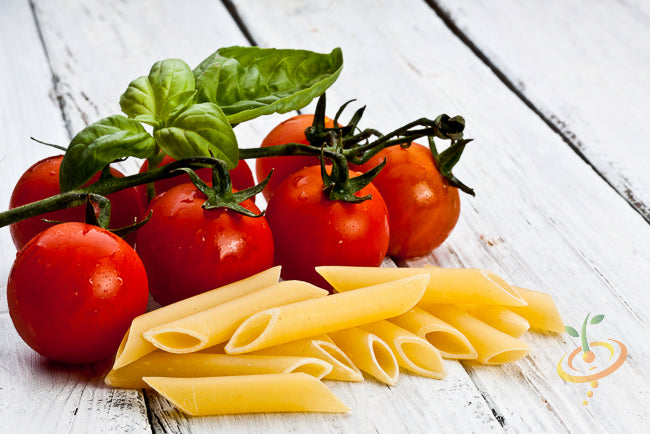
Use this variety of basil in your favorite Neapolitan cuisine dishes! Use the extra large leaves, fresh or dried, in tomato dishes, pasta sauces, vegetable dishes and soups.
See Basil Recipes & Growing Tips on our Pinterest Board
Shop all Basil Seeds Shop Good Companion Plants for Basil 📚 Grow Guide: Basil -
From $099 USDUnit price /Unavailable
Description
Licorice Basil is a type of Thai basil with a pleasant, sweet licorice flavor. Beautiful as a fragrant and ornamental accent throughout the garden, and delicious in salads, baked goods, and pasta sauce. It’s also pleasant to look at with deep green leaves that sometimes show a burgundy tinge, plum-colored stems, and lavender flower spikes that make a fun garnish for any salad, dish, or drink.Harvest the leaves and stems from the top part of the plant, and pinch off edible flower buds as they appear, which prevents the leaves from turning bitter, and signals the plant to branch out and grow more leaves, making a bushier plant.
The more you harvest, the more it grows!
- Sweet, pleasant licorice flavor
- Thai basil type
- Edible ornamental
- Good for containers
- Tons of medicinal benefits!
As a medicinal herb, Basil has been used internally to treat anxiety, colds, colic, cough, depression, diarrhea, fever, flatulence, flu, indigestion, insomnia, intestinal parasites and worms, exhaustion, gastric pain, gonorrhea, lactation problems, migraine headache, nausea, stomach cramps, sore throat, and vomiting, and externally to treat acne, insect bites and stings, loss of smell, skin problems, snake bites.
⚠️ Do not use medicinally while pregnant.
⚠️ Medicinal properties are presented as information only, and are not a recommendation or prescription for use. Consult a medical professional before using any herb medicinally.
As a companion plant, it attracts hummingbirds, pollinators, and beneficial insects, and repels asparagus beetles, cabbage moths, cabbage white butterfly, cabbage worms, carrot rust fly, flies, maggots, mice, mosquitoes, spider mites, thrips, and tomato hornworms.
Shop all Basil Seeds Shop Good Companion Plants for Basil 📚 Grow Guide: Basil 
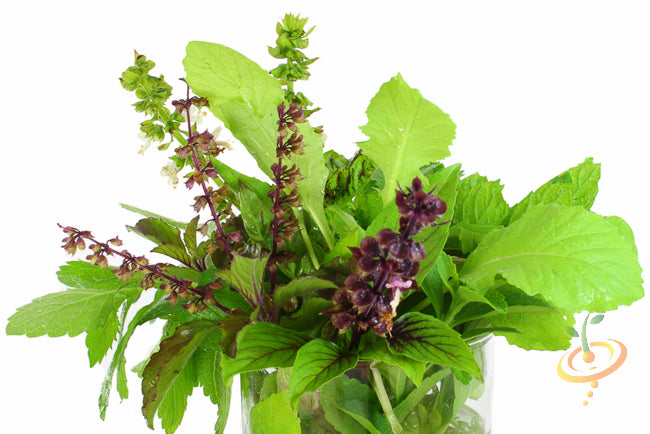
This basil variety produces lovely and flavorful green leaves with purple accents. It has a strong, but enjoyable licorice flavor and can grow up to 24" tall.

What is Licorice Basil?
This basil is a type of Thai Basil, also known as anise basil. It has strong licorice and anise flavors, qualities and aromatics. It's known to be slightly "lanky" with pointed green leaves with signature purple flowers. Both the leaves and flowers are edible on this plant.
Health Benefits of Licorice Basil
Licorice Basil can be used for treating the common cold, the flu, diabetes, asthma, bronchitis, earaches, headaches, upset stomachs, heart disease, fever, and more. It promotes longevity but something you may not know is that its an excellent mosquito repellent!

Ways to Consume Licorice BasilWhen Licorice Basil leaves are crushed, they burst with intense basil and licorice aromas. Fragrant and floral, the spicy paste is a condiment for multiple dishes. This basil is best when mixed with other ingredients to tame it's powerful one-dimensional notes.
See Basil Recipes & Growing Tips on our Pinterest Board
Shop all Basil Seeds Shop Good Companion Plants for Basil 📚 Grow Guide: Basil -
From $099 USDUnit price /Unavailable
Description
Lime Basil is as fresh and uplifting as it sounds. The bright green leaves are infused with a zesty lime fragrance and tangy flavor that’s best used fresh in coconut-heavy Asian dishes, seafood dishes, fruit salads, limeade, cocktails, and salad dressings. Add at the end of cooking to preserve the citrus flavor, then garnish with the edible flowers.
Harvest the leaves and stems from the top part of the plant, and pinch off edible flower buds as they appear, which prevents the leaves from turning bitter, and signals the plant to branch out and grow more leaves, making a bushier plant.
The more you harvest, the more it grows!
- Fresh, zesty lime-anise flavor
- Culinary and medicinal
- Good for indoor gardens
- Good for containers
- Tons of medicinal benefits!
As a medicinal herb, Basil has been used internally to treat anxiety, colds, colic, cough, depression, diarrhea, fever, flatulence, flu, indigestion, insomnia, intestinal parasites and worms, exhaustion, gastric pain, gonorrhea, lactation problems, migraine headache, nausea, stomach cramps, sore throat, and vomiting, and externally to treat acne, insect bites and stings, loss of smell, skin problems, snake bites.
⚠️ Do not use medicinally while pregnant.
⚠️ Medicinal properties are presented as information only, and are not a recommendation or prescription for use. Consult a medical professional before using any herb medicinally.
As a companion plant, it attracts hummingbirds, pollinators, and beneficial insects, and repels asparagus beetles, cabbage moths, cabbage white butterfly, cabbage worms, carrot rust fly, flies, maggots, mice, mosquitoes, spider mites, thrips, and tomato hornworms.
Shop all Basil Seeds Shop Good Companion Plants for Basil 📚 Grow Guide: Basil 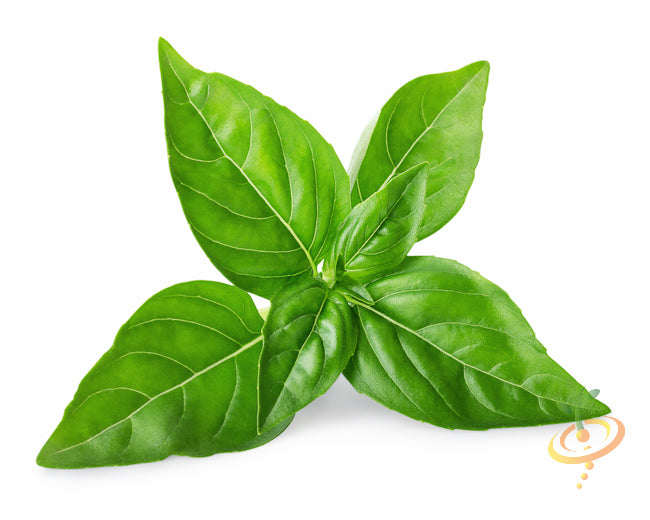
The Lime Basil plant is very easy to grow and smells extremely fragrant! It has an amazing lemon scent, perfect for homemade lemonade! Use this in all your favorite culinary creations! It grows to the perfect size for planting in containers, and the aroma of just passing by this herb, will take your senses on an enjoyable ride.
What is Lime Basil?
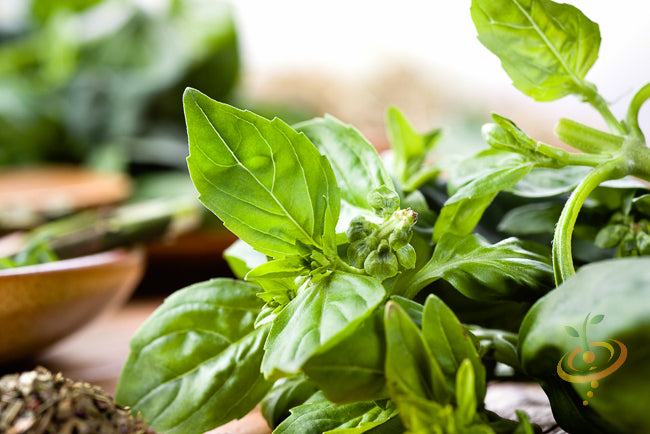
Lime Basil offers a crisp citrus flavor, with a zesty undertones. It grows as an annual herb with white or lavender flowers. It has many medicinal purposes which makes it an "all around great herb" to grow in your own gardens.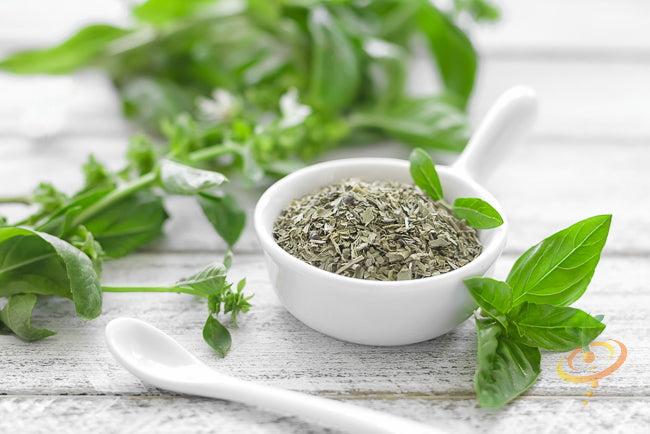
Health Benefits of Lime Basil
From treating some cancers, symptoms of stress, asthma and diabetes, Lime Basil is recognized widely as a medicinal herb.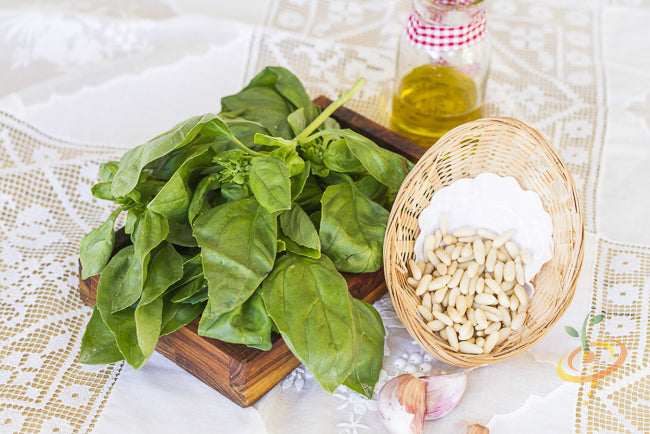
Ways to Consume Lime BasilUsed commonly in fresh cooked recipes, always add it at the last moment so that the cooking doesn't destroy the citrus flavor. It is a favorite ingredient in pesto, and used to thicken soups. Try it with fried chicken, or steeping it in milk to create lovely ice creams or chocolates. Don't toss the flower buds, they are full of flavor and are edible as well.See Basil Recipes & Growing Tips on our Pinterest Board
Shop all Basil Seeds Shop Good Companion Plants for Basil 📚 Grow Guide: Basil  From $099 USDUnit price /Unavailable
Description
Red Velvet Leaf Basil is a delight for all of your senses. When you see the firm, smooth, deep burgundy leaves, you must touch them, which releases a divine anise fragrance that you have to nibble, and then you hear your own sigh of gratitude that this enchanting herb is growing in your garden, producing all summer long.Harvest the leaves and stems from the top part of the plant, and pinch off edible flower buds as they appear, which prevents the leaves from turning bitter, and signals the plant to branch out and grow more leaves, making a bushier plant.
The more you harvest, the more it grows!
- Rich basil flavor
- Culinary, medicinal, and ornamental
- Good for indoor gardens
- Good for containers
- Tons of medicinal benefits!
As a medicinal herb, Basil has been used internally to treat anxiety, colds, colic, cough, depression, diarrhea, fever, flatulence, flu, indigestion, insomnia, intestinal parasites and worms, exhaustion, gastric pain, gonorrhea, lactation problems, migraine headache, nausea, stomach cramps, sore throat, and vomiting, and externally to treat acne, insect bites and stings, loss of smell, skin problems, snake bites.
Works as well with garlic and tomato as it does with honey and fruit, and makes a rich herbal tea. Dress up a Lollo Rossa Lettuce salad with the edible amethyst flowers.
YIELD Do not use medicinally while pregnant.
YIELD Medicinal properties are presented as information only, and are not a recommendation or prescription for use. Consult a medical professional before using any herb medicinally.
As a companion plant, it attracts hummingbirds, pollinators, and beneficial insects, and repels asparagus beetles, cabbage moths, cabbage white butterfly, cabbage worms, carrot rust fly, flies, maggots, mice, mosquitoes, spider mites, thrips, and tomato hornworms.
Shop all Basil Seeds Shop Good Companion Plants for Basil 📚 Grow Guide: Basil  This Red Velvet Leaf Basil plant produces high yields of deed red-colored leaves that are very aromatic. It will produce continuously all season long, and grows perfect in containers.

What is Red Velvet Leaf Basil?
This variety of basil boasts unusual reddish-purple leaves and has a stronger flavor than most other types. It is appealing in salads, and used often as a garnish. It's been known to repel mosquitoes too! You can raise this type of basil indoors in a sunny window or outdoors in areas with warm summers.
Health Benefits of Red Velvet Leaf Basil
Red Velvet Leaf Basil is packed with phyto-nutrients and health benefits. Rub crushed leaves on your skin to repel mosquitoes. It is a potent anti-oxidant with anti-inflammatory properties as well. This basil is an excellent source of iron and has been known to clear the mind and uplift the spirit.
Ways to Consume Red Velvet Leaf BasilTry Red Velvet Leaf Basil in your favorite salads, fruit jams, sauces, tea or paired with fresh fruit. Garlic flavors pair beautifully with this basil also.See Basil Recipes & Growing Tips on our Pinterest Board
Shop all Basil Seeds Shop Good Companion Plants for Basil 📚 Grow Guide: Basil  From $099 USDUnit price /Unavailable
Description
Thai Basil has small sturdy leaves that hold up well to high-heat cooking, purple stems, and delicate, edible violet flower spikes that make the whole plant look like a lavender bush when allowed to fully bloom.The spicy clove-anise flavor brings an earthy essence to pesto, Thai curries, stir fries, citrus salads, and cocktails. Elegant in cut flower arrangements, too.
Harvest the leaves and stems from the top part of the plant, and pinch off edible flower buds as they appear, which prevents the leaves from turning bitter, and signals the plant to branch out and grow more leaves, making a bushier plant.
The more you harvest, the more it grows!
- Spicy clove-anise flavor
- Culinary, medicinal, and ornamental
- Good for indoor gardens
- Good for containers
- Tons of medicinal benefits!
As a medicinal herb, Basil has been used internally to treat anxiety, colds, colic, cough, depression, diarrhea, fever, flatulence, flu, indigestion, insomnia, intestinal parasites and worms, exhaustion, gastric pain, gonorrhea, lactation problems, migraine headache, nausea, stomach cramps, sore throat, and vomiting, and externally to treat acne, insect bites and stings, loss of smell, skin problems, snake bites.
⚠️ Do not use medicinally while pregnant.
⚠️ Medicinal properties are presented as information only, and are not a recommendation or prescription for use. Consult a medical professional before using any herb medicinally.
As a companion plant, it attracts hummingbirds, pollinators, and beneficial insects, and repels asparagus beetles, cabbage moths, cabbage white butterfly, cabbage worms, carrot rust fly, flies, maggots, mice, mosquitoes, spider mites, thrips, and tomato hornworms.Shop all Basil Seeds Shop Good Companion Plants for Basil 📚 Grow Guide: Basil 
Thai Basil is very fragrant and one of the most available varieties of basil. It has beautiful purple stems with bright green leaves. It is used widely in soups and curries, and other traditional Thai dishes.


What is Thai Basil?Thai Basil exhibits narrow leaves, with gorgeous purple stems. Sometimes mauve or pink-ish flowers. It needs warm air and sun to do well. This is a wonderful basil to grow if you are a Thai food enthusiast! It is also known as the "holy herb" in many traditions all around the world.

Health Benefits of Thai Basil
Thai Basil is a wonderful blood coagulant, and plays a role in strengthening bones. It contains a ton of iron, vitamin A, and plenty of essential oils.

Ways to Consume Thai BasilUse Thai Basil as a condiment, or a enjoy it as an accompaniment to Pho'. It is slightly anise-flavored so it goes extremely well in soups and curries.
See Basil Recipes & Growing Tips on our Pinterest Board
Shop all Basil Seeds Shop Good Companion Plants for Basil 📚 Grow Guide: Basil -
From $099 USDUnit price /Unavailable
Description
Greek Basil is a small-leaf dwarf variety that grows into a tight dome, about 1’ tall and wide. A great one for containers, hanging baskets, and indoor gardens. The bright green, oval leaves and soft stems have hints of clove and anise, and keep their flavor when dried. Use this variety to flavor herb butters and vinaigrettes, and the edible flowers as a garnish or salad green.Harvest the leaves and stems from the top part of the plant, and pinch off edible flower buds as they appear, which prevents the leaves from turning bitter, and signals the plant to branch out and grow more leaves, making a bushier plant.
The more you harvest, the more it grows!
- Basil-clove-anise flavor
- Compact plant
- Good for indoor gardens
- Good for containers
- Tons of medicinal benefits!
As a medicinal herb, Basil has been used internally to treat anxiety, colds, colic, cough, depression, diarrhea, fever, flatulence, flu, indigestion, insomnia, intestinal parasites and worms, exhaustion, gastric pain, gonorrhea, lactation problems, migraine headache, nausea, stomach cramps, sore throat, and vomiting, and externally to treat acne, insect bites and stings, loss of smell, skin problems, snake bites.
⚠️ Do not use medicinally while pregnant.
⚠️ Medicinal properties are presented as information only, and are not a recommendation or prescription for use. Consult a medical professional before using any herb medicinally.
As a companion plant, it attracts hummingbirds, pollinators, and beneficial insects, and repels asparagus beetles, cabbage moths, cabbage white butterfly, cabbage worms, carrot rust fly, flies, maggots, mice, mosquitoes, spider mites, thrips, and tomato hornworms.
Shop all Basil Seeds Shop Good Companion Plants for Basil 📚 Grow Guide: Basil

See Basil Recipes & Growing Tips on our Pinterest Board
Shop all Basil Seeds Shop Good Companion Plants for Basil 📚 Grow Guide: Basil -
From $099 USDUnit price /Unavailable
Description
Lemon Basil, also called Hoary Basil (for its fuzzy stems), is a hybrid cross between traditional basil and lime basil.The bright green leaves have a sweet lemony aroma and a tangy lemon-anise flavor that’s best used fresh in seafood dishes, fruit salads, lemonade, cocktails, and salad dressings. Add at the end of cooking to preserve the citrus flavor, then garnish with the edible flowers.
Harvest the leaves and stems from the top part of the plant, and pinch off edible flower buds as they appear, which prevents the leaves from turning bitter, and signals the plant to branch out and grow more leaves, making a bushier plant.
The more you harvest, the more it grows!
- Tangy lemon-anise flavor
- Culinary and medicinal
- Good for indoor gardens
- Good for containers
- Tons of medicinal benefits!
As a medicinal herb, Basil has been used internally to treat anxiety, colds, colic, cough, depression, diarrhea, fever, flatulence, flu, indigestion, insomnia, intestinal parasites and worms, exhaustion, gastric pain, gonorrhea, lactation problems, migraine headache, nausea, stomach cramps, sore throat, and vomiting, and externally to treat acne, insect bites and stings, loss of smell, skin problems, snake bites.
⚠️ Do not use medicinally while pregnant.
⚠️ Medicinal properties are presented as information only, and are not a recommendation or prescription for use. Consult a medical professional before using any herb medicinally.
As a companion plant, Basil attracts hummingbirds, pollinators, and beneficial insects, and repels asparagus beetles, cabbage moths, cabbage white butterfly, cabbage worms, carrot rust fly, flies, maggots, mice, mosquitoes, spider mites, thrips, and tomato hornworms.
Shop all Basil Seeds Shop Good Companion Plants for Basil 📚 Grow Guide: Basil Health Benefits of Lemon Basil
Basil is a known health tonic for expecting mothers and when mixed with tea it increases lactation in mothers. It is also a nerve tonic and young children are sometimes encouraged to chew on the leaves of basil because it stimulates brain cells and can increase memory.
See Basil Recipes & Growing Tips on our Pinterest Board
Shop all Basil Seeds Shop Good Companion Plants for Basil 📚 Grow Guide: Basil -
From $099 USDUnit price /Unavailable
Description
Let us tell you about Lettuce Leaf Basil. It’s a lovely Italian basil that grows huge leaves as big as your hand, with a flavor that’s sweeter and less spicy than other basils. Its crinkles hold onto dressing in salads, you need only one leaf for a sandwich or wrap, and you can use the rest as you would any other basil. Save the edible flower spikes to garnish seafood dishes and cocktails.Harvest the leaves and stems from the top part of the plant, and pinch off edible flower buds as they appear, which prevents the leaves from turning bitter, and signals the plant to branch out and grow more leaves, making a bushier plant. The more you harvest, the more it grows!
- Sweet and mild
- Huge 5"-6" leaves
- Grows 1'-2' tall
- Good for containers
- Tons of medicinal benefits!
As a medicinal herb, Basil has been used internally to treat anxiety, colds, colic, cough, depression, diarrhea, fever, flatulence, flu, indigestion, insomnia, intestinal parasites and worms, exhaustion, gastric pain, gonorrhea, lactation problems, migraine headache, nausea, stomach cramps, sore throat, and vomiting, and externally to treat acne, insect bites and stings, loss of smell, skin problems, snake bites.
⚠️ Do not use medicinally while pregnant.
⚠️ Medicinal properties are presented as information only, and are not a recommendation or prescription for use. Consult a medical professional before using any herb medicinally.
As a companion plant, Basil attracts hummingbirds, pollinators, and beneficial insects, and repels asparagus beetles, cabbage moths, cabbage white butterfly, cabbage worms, carrot rust fly, flies, maggots, mice, mosquitoes, spider mites, thrips, and tomato hornworms.
Shop all Basil Seeds Shop Good Companion Plants for Basil 📚 Grow Guide: Basil Health Benefits of Genovese Basil
Basil is a known health tonic for expecting mothers and when mixed with tea it increases lactation in mothers. It is also a nerve tonic and young children are sometimes encouraged to chew on the leaves of basil because it stimulates brain cells and can increase memory.
See Basil Recipes & Growing Tips on our Pinterest Board
Shop all Basil Seeds Shop Good Companion Plants for Basil 📚 Grow Guide: Basil  From $299 USDUnit price /Unavailable
Description
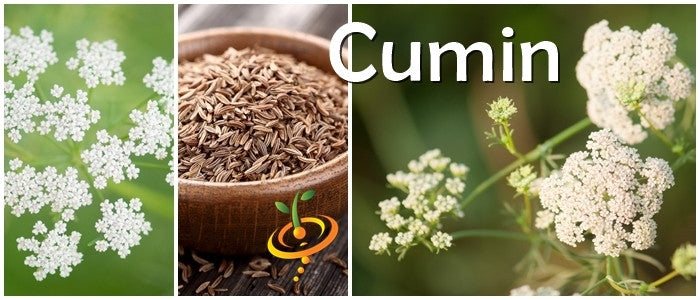
Cumin is an aromatic herb with feathery foliage and small pinkish flowers. The seeds are used as a spice, both whole and powdered, and is second only to black pepper as the most popular spice across all continents. Its earthy, nutty, slightly bitter flavor is used extensively in traditional North African, Indian, and Mexican cuisines. Thrives in hot, dry conditions. The leaves and flowers are also edible, and can be used to add unique flavor to salads and pickling brines.
- Earthy, nutty, flavor
- Heat and drought tolerant
- Grows 8"-12" tall
- Good for containers
As a companion plant, it attracts pollinators and beneficial insects.
As a medicinal herb, Cumin seed has been used internally to treat bloating, colic, cough, fever, flatulence, headache, indigestion, insomnia, pain, restlessness, stomach upset, and weight issues, and externally to treat skin problems and toothache.
SEED PLANTING TIPS
- Botanical name: Cuminum cyminum
- Life cycle: Herbaceous annual
- Hardiness zones: 5-10
- Planting season: Spring
- Days to maturity: 120-150 days; can begin harvesting when 6" tall
- Depth to plant seeds: 1/4" deep
- Days to germinate (sprout): 7-14 days
- Germination soil temps: 68F-86F
- Spacing between plants: 4"-6" apart
- Spacing between rows: 18"-24" apart
- # of plants per sq. ft.: Appx. 9 plants per sq. ft.
- Soil types: Sandy, loamy, rich, dry, moist, well-drained
- Soil pH: 6.5-8.0
- Sun needs: Full sun
- Water needs: Low - do not overwater
- Cold stratify: No
- Frost tolerant: No
- Heat tolerant: Yes
- Drought tolerant: Yes
- Deer resistant: Yes
- Culinary use: Yes
- Medicinal use: Yes
⚠️ Medicinal properties are presented as information only, and are not a recommendation or prescription for use. Consult a medical professional before using any herb medicinally.
See Cumin Recipes & Growing Tips on our Pinterest Board
Follow SeedsNow.com's board Cumin on Pinterest. -
From $299 USDUnit price /Unavailable
Description

-
Produces very flavorful large bulbs and edible flower buds
- Excellent for seasonings and for cooking as a vegetable
- Plant Height: 30" tall
- Fennel is a very aromatic plant with a sweet licorice flavor, similar to an anise seed. It has many medicinal uses and herbalists have been using it for centuries to relieve problems with the respiratory system, stomach muscles and intestines. Nursing mothers can expect increased milk production and fennel also has been used to soothe colicky infants.
- Fennel has a long history of herbal use and is a commonly used household remedy, being useful in the treatment of a variety of complaints, especially those of the digestive system.
- Easy to grow
- There are so many health benefits associated with this plant
-
Days to Maturity | 80 days
-
Fennel Seeds | Fennel is known as a perennial that ought to be planted sometime after the last frost of the winter. Try sowing seeds directly into your gardens, because transplanting fennel usually doesn't work very well.
Click here for complete Fennel grow guide
See Fennel Recipes & Growing Tips on our Pinterest Board
-
Produces very flavorful large bulbs and edible flower buds
-
From $299 USDUnit price /Unavailable
Description

- The Fenugreek plant produces extremely flavorful seeds which are widely used in many Indian dishes, including Curry powder
- The green leaves are used in many Middle Eastern vegetable dishes
- Fenugreek also has a long history of being used as a medicinal herb to aid in digestion and aid in healing
- Acts as a laxactive. lubricates the intestines, and reduces fevers. Has also been shown to lower cholesterol and blood sugar levels. Helps with asthma and sinus issues by reducing mucus. Promotes lactation in nursing mothers. Good for eyes and for inflammation and lung disorders.
- Days to Maturity | 75 days
Follow SeedsNow.com's board Fenugreek on Pinterest.  From $299 USDUnit price /Unavailable
Description

- The lemon balm plant produces beautiful lemon scented leaves
- The leaves are typically used in teas, sauces, salads, soups, stews, and drinks
- Lemon Balm tea is said to stimulate the heart and calms the nerves
- A variety native of Europe
- Perennial
- Days to Maturity | 75 days
- The lemon balm plant produces beautiful lemon scented leaves
-
From $299 USDUnit price /Unavailable
Description

Sweet Marjoram is a versatile herb with a warm, oregano-like flavor perfect for meats, stews, casseroles, poultry, sausages, and sauces. Use it fresh or dried to elevate your cooking. Beyond the kitchen, marjoram has been traditionally valued for its potential to ease rheumatoid pain, tension headaches, and minor digestive discomfort. It also makes a fragrant addition to potpourri and sachets for linens and closets. This herb thrives in small containers, making it ideal for kitchen gardens or patios. Reaches maturity in approximately 90 days, giving you fresh harvests throughout the growing season.
- Has an Oregano-like flavor. It can be used in many dishes including meats, stews, casseroles, poultry, sausages, and sauces.
- Can be used dried or fresh. Great flavor and taste.
- Marjoram is also known for its healing properties with rheumatoid pain, tension headaches and minor digestive problems.
- It can be used in potpourri or added to sachets for linen and clothing cupboards.
- Easy to grow in a small container.
-
Days to Maturity | 90 days
-
Radicchio - Classic Red (Italian Chicory) seeds
From $299 USDUnit price /UnavailableDescription

- Radicchio is sometimes also referred to as the Italian chicory
- They're grown as a leaf vegetable
- White-veined red leaves
- Excellent grilled or roasted
- How to Grow Organic Radicchio from Seed
-
Days to Maturity | 65 days
- Radicchio is sometimes also referred to as the Italian chicory
-
From $299 USDUnit price /Unavailable
Description

Salad Burnet (Poterium sanguisorba) is a hardy perennial herb that brings fresh cucumber flavor to your garden. Its delicate, serrated leaves taste and smell remarkably like cucumbers, making them perfect for salads, soups, stews, and refreshing drinks. Beyond the kitchen, Salad Burnet has been traditionally used in facial treatments to support healthy skin. This low-maintenance plant reaches 18 inches tall and matures in about 75 days. For best results, keep flowers trimmed to encourage continuous leaf production throughout the growing season. A versatile addition to any herb garden, Salad Burnet thrives as a perennial and provides harvests year after year.
- Poterium sanguisorba. Perennial. Keep flowers cut to promote leaf growth
- Plant produces serrated leaves that tastes and smells like cucumbers
- Can be used in salads, soups, stews, and flavored drinks
- Can also be used in facial treatments to improve skin
- Plant Height: 18" tall
- Days to Maturity | 75 days
- Poterium sanguisorba. Perennial. Keep flowers cut to promote leaf growth
-
From $299 USDUnit price /Unavailable
Description

- The Summer Savory plant grows tasty peppery flavored leaves
- This is the herb to use if you want to flavor beans, cabbage, peas, and any other dishes - Widely used as a medicinal herb for curing sore throats
- Use the leaves to make some tea and you'll be feeling great
-
Days to Maturity | 65 days
- The Summer Savory plant grows tasty peppery flavored leaves
-
From $299 USDUnit price /Unavailable
Description

- Tarragon, aka Dragon Wort, is a popular herb widely recognized for its strong aroma and many culinary uses.
- A native herb of Europe
- Used to compliment to many classic continental – mostly French – dishes
- Tarragon seeds should be planted in a warm and sunny spot
- Grows well in containers
- Tarragon is perfect for seasoning chicken, fish, and egg dishes
- Days to Maturity | 85 days
- Tarragon, aka Dragon Wort, is a popular herb widely recognized for its strong aroma and many culinary uses.
-
From $299 USDUnit price /Unavailable
Description

Evergreen Parsley Seeds
(100% Heirloom/Non-Hybrid/Non-GMO)- Dark green curly parsley leaves.
- Can withstand frost and cooler temps better than the other varieties.
- Use this parsley for garnishing, and culinary decoration.
-
Day to Maturity | 70 days
- Planting Guide | Sow directly in your garden and space seeds 7" apart. Seeds can take a while to sprout. Can take 3-4 weeks before seedlings appear. Plant will grow to about 10" tall in about 60 days.

Additional DetailsParsley is a commonly grown culinary and medicinal herb that is often used as a domestic medicine. The fresh leaves are highly nutritious and can be considered a natural vitamin and mineral supplement in their own right. The plants prime use is as a diuretic where it is effective in ridding the body of stones and in treating jaundice, dropsy, cystitis etc. It is also a good detoxifier, helping the body to get rid of toxins via the urine and therefore helping in the treatment of a wide range of diseases such as rheumatism
- Dark green curly parsley leaves.
-
Parsley - Rooted Hamburg seeds
From $299 USDUnit price /UnavailableDescription
-
A very old heirloom variety dating back to the 1600's
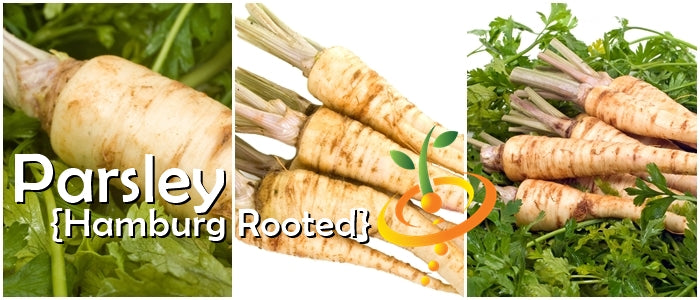
- Hamburg Rooted Parsley is used differently than other parsley plants. It's actually preferred by many European cooks and is typically the main ingredient for many stews
- Hamburg Rooted Parsley is a large edible root with smooth mild parsley flavor
- Very easy to grow
- In Europe root parsley is usually the first choice over parsnips
-
Day to Maturity | 85 days
-
A very old heirloom variety dating back to the 1600's
-
Angelica (Wild Celery / Holy Ghost) seeds
From $299 USDUnit price /UnavailableDescription
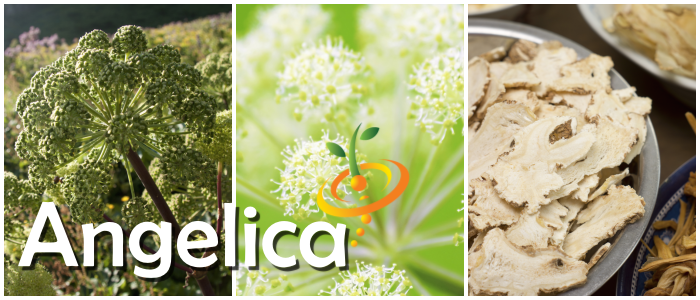
Angelica (Angelica archangelica), also called Wild Celery and Holy Ghost, is a fragrant herb in the carrot family. Like a carrot, it’s a biennial that flowers the second year, and it has a long thick root. But it’s not a carrot. For starters, it tastes like licorice. And the plant can grow to 4'-6' tall. It prefers cooler weather and growing near running water, so congrats if you’re gardening along the riverbanks of Utopia. The rest of us can just grow it in dappled shade and make sure the soil doesn’t dry out.
The flowers, leaves, seeds, stems, and roots are all edible. Peel the young, hollow, purple-tinged stems and use like celery, use the leaves like spinach, or make a tea from the leaves, flowers, seeds, and roots.
As a medicinal herb, Angelica has been used to treat anxiety, bladder infections, bronchitis, colds, cough, fever, flatulence, indigestion, insomnia, heartburn, lack of appetite, poor circulation, respiratory issues, typhus, and upset stomach.
Mild licorice flavorAll parts are edibleCulinary and medicinalGood fresh and cooked
As a companion plant, it attracts all sorts of friendly pollinators and beneficial insects.
⚠️ Medicinal properties are presented as information only, and are not a recommendation or prescription for use. Consult a medical professional before using any herb medicinally.
SEED PLANTING TIPS
- Botanical name: Angelica archangelica
- Life cycle: Herbaceous biennial
- Hardiness zones: 4-8
- Planting season: Spring, fall
- Days to maturity: 1-2 years; can begin harvesting when 6" tall
- Depth to plant seeds: Lightly cover - seeds need light to germinate
- Days to germinate (sprout): 14-28 days
- Germination soil temps: 60F-65F
- Spacing between plants: 18"-24" apart
- Spacing between rows: 24"-36" apart
- # of plants per sq. ft.: Appx. 1 plant per 2 sq. ft.
- Soil types: Clay, sandy, loamy, silty, moist, well-drained
- Soil pH: 4.5-7.4
- Sun needs: Full sun, part shade
- Water needs: High - keep soil moist
- Cold stratify: Yes
- Frost tolerant: Yes
- Heat tolerant: No
- Drought tolerant: No
- Deer resistant: No
- Culinary use: Yes
- Medicinal use: Yes
-
From $299 USDUnit price /Unavailable
Description

Soapwort (Saponaria officinalis) is a beautiful, robust perennial in the carnation family with dark green lance-shaped leaves and light pink star-shaped flowers that have a pleasant floral clove scent. Can grow 1'-2' tall and 12"-18" wide, and prefers cooler weather. The entire plant contains saponins, with the highest concentration in the roots, which make a gentle foamy lather when mixed with warm water, and is used as detergent or soap to clean skin, hair, and delicate fabrics. Also called Bouncing Bet, a historical expression for a laundry woman. Reseeding and runner roots enable it to spread easily and it can become invasive.As a medicinal plant, Soapwort has been used internally to treat bronchitis, colds, cough, diarrhea, kidney stones, and respiratory problems, and externally to treat acne, boils, burns, eczema, inflammation, itchy skin, muscle pain, poison ivy, psoriasis, rash, and wounds.
⚠️ Toxic to people, pets, and livestock if ingested in large quantities. Toxic to fish, so do not grow near waterways. Do not ingest while pregnant or nursing.
⚠️ Medicinal properties are presented as information only, and are not a recommendation or prescription for use. Consult a medical professional before using any plant medicinally.
- Life cycle: Herbaceous perennial
- Bloom season: Summer
- Attracts: Hummingbirds, bees, butterflies, and other pollinators
- Flower meaning: Innocence, pure love
SEED PLANTING TIPS
- Botanical name: Saponaria officinalis
- Hardiness zones: 3-9
- Planting season: Spring, fall
- Days to maturity: 85 days-2 years
- Cold stratify: Yes
- Depth to plant seeds: Lightly cover - seeds need light to germinate
- Days to germinate (sprout): 7-28 days
- Germination soil temps: 60F-70F
- Spacing between plants: 12"-18" apart
- Soil types: Clay, sandy, loamy, silty, rocky, chalky, poor, average, moist, well-drained
- Soil pH: 6.6-7.8
- Water needs: Average
- Sun needs: Full sun, part shade
- Frost tolerant: Yes
- Drought tolerant: Yes
- Deer resistant: Yes
-
Garlic - (Soft Neck) - Elephant (Organic)
From $299 USDUnit price /UnavailableDescription
Quick Overview:
• Enormous
• Mild flavor
Details
The cloves are very easy-peeling. You'd think you have a giant hard-neck here, but the bulbs keep very well, more like a soft-neck. Elephant Garlic is also popular and profitable market gardeners' crop in some areas.Elephant Garlic (Soft Neck, Organic) is a standout choice for any garden, offering impressively large cloves with a mild, delicious flavor that enhances a variety of dishes. Its easy-to-grow nature thrives in well-drained soil and full sun, making it perfect for organic gardeners seeking a sustainable, chemical-free crop. The soft neck allows for convenient storage and beautiful braided harvests. Choose Elephant Garlic to enjoy a bountiful, flavorful harvest that elevates your cooking while supporting natural gardening practices. This is garlic you’ll love to grow and savor.
How to Plant Garlic
Garlic can be planted in the spring as soon as the ground can be worked, but fall planting is recommended. Bulbs will grow bigger and more flavorful when you plant them in the fall. Plant 6 to 8 weeks before your first hard frost. In southern areas, February or March can be a better time to plant.
Key Planting Info:
- Break apart cloves from bulb but keep the papery husk on each individual clove.
- Ensure soil is well-drained with plenty of organic matter. Plant in Full Sun.
- Plant 4 inches apart & 2 inches deep, in their upright position (the wide end down and pointed end facing up).
- Come springtime, shoots will begin to emerge.
Click here for a more detailed Garlic Grow Guide -> -
Garlic - (Soft Neck) Early Purple Italian (Organic)
From $299 USDUnit price /UnavailableDescription
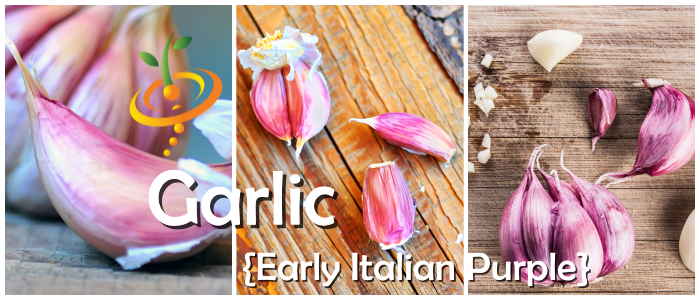
Quick Overview
• Organic• Best Seller!
• Early
• An excellent variety for hot climates• Mild Flavor
• Purple stripes
Details
The bulb is large and white-skinned with purple stripes and numerous small cloves. Widely grown around Gilroy, California, the "garlic capital" of the world.How to Plant Garlic
Garlic can be planted in the spring as soon as the ground can be worked, but fall planting is recommended. Bulbs will grow bigger and more flavorful when you plant them in the fall. Plant 6 to 8 weeks before your first hard frost. In southern areas, February or March can be a better time to plant.
Key Planting Info:
- Break apart cloves from bulb but keep the papery husk on each individual clove.
- Ensure soil is well-drained with plenty of organic matter. Plant in Full Sun.
- Plant 4 inches apart & 2 inches deep, in their upright position (the wide end down and pointed end facing up).
- Come springtime, shoots will begin to emerge.
Click here for a more detailed Garlic Grow Guide -> -
Garlic - (Soft Neck) Nootka Rose (Organic)
From $299 USDUnit price /UnavailableDescription

This heirloom garlic has medium to large bulb.
- Beautifully bright white skin with light rose-colored streaked cloves
- Very attractive for braiding.
- Excellent flavor.
- Strong flavor.
- In rich soil, cloves can lose their rosy hue.
- This variety of garlic has long shelf-life and will store well into next spring or even summer.
How to Plant Garlic
Garlic can be planted in the spring as soon as the ground can be worked, but fall planting is recommended. Bulbs will grow bigger and more flavorful when you plant them in the fall. Plant 6 to 8 weeks before your first hard frost. In southern areas, February or March can be a better time to plant.
Key Planting Info:
- Break apart cloves from bulb but keep the papery husk on each individual clove.
- Ensure soil is well-drained with plenty of organic matter. Plant in Full Sun.
- Plant 4 inches apart & 2 inches deep, in their upright position (the wide end down and pointed end facing up).
- Come springtime, shoots will begin to emerge.
-
Garlic - (Soft Neck) Silver Rose (Organic)
From $299 USDUnit price /UnavailableDescription
This heirloom garlic has medium to large bulb.
- Rose-colored cloves in very smooth bright-white bulbs.
- Mild flavor
- Beautiful garlic to braid!
- The longest-storing garlic we sell.
- Fast-growing garlic.
- Very popular in western and southern US and in France and Italy.
How to Plant Garlic
Garlic can be planted in the spring as soon as the ground can be worked, but fall planting is recommended. Bulbs will grow bigger and more flavorful when you plant them in the fall. Plant 6 to 8 weeks before your first hard frost. In southern areas, February or March can be a better time to plant.
Key Planting Info:
- Break apart cloves from bulb but keep the papery husk on each individual clove.
- Ensure soil is well-drained with plenty of organic matter. Plant in Full Sun.
- Plant 4 inches apart & 2 inches deep, in their upright position (the wide end down and pointed end facing up).
- Come springtime, shoots will begin to emerge.
Click here for a more detailed Garlic Grow Guide -> -
Garlic - (Soft Neck) Inchelium Red (Organic)
From $299 USDUnit price /UnavailableDescription
Quick Overview
• Organic• Large bulbs• Softneck
• Dense cloves
Details
From Inchelium, WA, on the Colville Indian Reservation. The bulbs are large - to 3+ inches in diameter. 8-20 cloves of good size. Mild, but lasting, flavor, with a hint of hot! Dense cloves store well. The flavor can get stronger in storage. This vigorous soft-necked variety won a Rodale taste test of 20 garlic strains - named \"Very Best of the Soft-Necks.\" Available Spring and Fall.
How to Plant Garlic
Garlic can be planted in the spring as soon as the ground can be worked, but fall planting is recommended. Bulbs will grow bigger and more flavorful when you plant them in the fall. Plant 6 to 8 weeks before your first hard frost. In southern areas, February or March can be a better time to plant.
Key Planting Info:
- Break apart cloves from bulb but keep the papery husk on each individual clove.
- Ensure soil is well-drained with plenty of organic matter. Plant in Full Sun.
- Plant 4 inches apart & 2 inches deep, in their upright position (the wide end down and pointed end facing up).
- Come springtime, shoots will begin to emerge.
Click here for a more detailed Garlic Grow Guide -> -
Garlic - (Soft Neck) Italian Late (Organic)
From $299 USDUnit price /UnavailableDescription
Quick Overview
• Beautiful to braid!
• Fast growing
• Softneck
Details
Light colored wrappers covering cloves which are generally fat and round. The extra-tight skin makes it a better keeper. This variety matures later than Early Italian Purple and tends to be somewhat smaller then Early Italian Purple as well. Good braiding type. Available Spring and Fall.
How to Plant GarlicGarlic can be planted in the spring as soon as the ground can be worked, but fall planting is recommended. Bulbs will grow bigger and more flavorful when you plant them in the fall. Plant 6 to 8 weeks before your first hard frost. In southern areas, February or March can be a better time to plant.
Key Planting Info:
- Break apart cloves from bulb but keep the papery husk on each individual clove.
- Ensure soil is well-drained with plenty of organic matter. Plant in Full Sun.
- Plant 4 inches apart & 2 inches deep, in their upright position (the wide end down and pointed end facing up).
- Come springtime, shoots will begin to emerge.
Click here for a more detailed Garlic Grow Guide -> -
Shungiku, Edible Chrysanthemum seeds
From $299 USDUnit price /UnavailableDescription
Shungiku is a versatile Asian green prized for its delicate, slightly peppery leaves and edible flowers. Also known as Garland Chrysanthemum or Chop Suey Greens, this cool-season crop thrives in winter and spring gardens, reaching maturity in 30–50 days. Harvest tender leaves fresh for salads, stir-fries, and Asian dishes. The flowers can be dried and brewed into a soothing herbal tea with stomach-calming properties, offering a natural alternative to chamomile. Easy to grow and highly productive, Shungiku brings authentic Asian flavor and dual-purpose harvests to any garden.
- Shungiku, Edible Chrysanthemum is a very versatile asian green.
- Known as Shungiku, Edible Chrysanthemum, Garland Chrysanthemum, Chop Suey Greens and many other names.
- This is a salad green that can be grown in winter and again in spring.
- The flowers of Shungiku can be dried and stored to be used for tea. Often considered a substitute for Chamomile - with its soothing and stomach quieting properties.
- Days to Maturity | 30 - 50 days
- Shungiku, Edible Chrysanthemum is a very versatile asian green.
-
From $299 USDUnit price /Unavailable
Description
Quick Overview
• Big bulbs!• Hard neck
• Excellent flavor
Details
How to Plant Garlic
Garlic can be planted in the spring as soon as the ground can be worked, but fall planting is recommended. Bulbs will grow bigger and more flavorful when you plant them in the fall. Plant 6 to 8 weeks before your first hard frost. In southern areas, February or March can be a better time to plant.
Key Planting Info:
- Break apart cloves from bulb but keep the papery husk on each individual clove.
- Ensure soil is well-drained with plenty of organic matter. Plant in Full Sun.
- Plant 4 inches apart & 2 inches deep, in their upright position (the wide end down and pointed end facing up).
- Come springtime, shoots will begin to emerge.
Click here for a more detailed Garlic Grow Guide -> -
Garlic - (Hard Neck) Porcelain German
From $299 USDUnit price /UnavailableDescription
Quick Overview
• Grows well in any climate• Hardneck
• Strong flavor
Details
Grows a very large bulb containing easy to peel cloves. The white wrappers have delicate purple stripes. This one is #1 on taste. Stores up to six months. Does well in any climate.
How to Plant Garlic
Garlic can be planted in the spring as soon as the ground can be worked, but fall planting is recommended. Bulbs will grow bigger and more flavorful when you plant them in the fall. Plant 6 to 8 weeks before your first hard frost. In southern areas, February or March can be a better time to plant.
Key Planting Info:
- Break apart cloves from bulb but keep the papery husk on each individual clove.
- Ensure soil is well-drained with plenty of organic matter. Plant in Full Sun.
- Plant 4 inches apart & 2 inches deep, in their upright position (the wide end down and pointed end facing up).
- Come springtime, shoots will begin to emerge.
Click here for a more detailed Garlic Grow Guide -> -
Garlic - (Hard Neck) Russian Red
From $299 USDUnit price /UnavailableDescription
Quick Overview
• Hard neck
• RocamboleDetails
Red Russian is a rocambole garlic that was brought to the Pacific Northwest by Russian immigrants in the 1900s. It can withhold very cold winter temperatures while being grown in the garden. Early-Mid Season and averages 6-7 cloves per bulb.
How to Plant Garlic
Garlic can be planted in the spring as soon as the ground can be worked, but fall planting is recommended. Bulbs will grow bigger and more flavorful when you plant them in the fall. Plant 6 to 8 weeks before your first hard frost. In southern areas, February or March can be a better time to plant.
Key Planting Info:
- Break apart cloves from bulb but keep the papery husk on each individual clove.
- Ensure soil is well-drained with plenty of organic matter. Plant in Full Sun.
- Plant 4 inches apart & 2 inches deep, in their upright position (the wide end down and pointed end facing up).
- Come springtime, shoots will begin to emerge.
Click here for a more detailed Garlic Grow Guide -> -
Garlic - (Hard Neck) Porcelain Musik
From $299 USDUnit price /UnavailableDescription
Quick Overview
• Porcelain• Hard-neck
• Very cold hardy
Details
A favorite, Musik is a porcelain type hardneck garlic with a rich flavor and medium to hot heat. Containing 4 to 8 easy to peel buff-colored cloves streaked with red highlights, it has excellent yields and is very cold hardy. Stores for 6 months or more.
Porcelain Musik is a hardneck variety that is well-suited for garden cultivation in temperate regions. It produces large, firm bulbs with a rich, complex flavor favored by chefs and gardeners alike. This variety develops a robust scape and exhibits excellent cold tolerance, allowing it to mature fully in cooler climates. Its natural resistance to diseases and pests ensures a dependable crop. Porcelain Musik’s cloves are easy to peel and store well, making it an outstanding choice for gardeners seeking premium garlic with superior taste and reliability.
How to Plant Garlic
Garlic can be planted in the spring as soon as the ground can be worked, but fall planting is recommended. Bulbs will grow bigger and more flavorful when you plant them in the fall. Plant 6 to 8 weeks before your first hard frost. In southern areas, February or March can be a better time to plant.
Key Planting Info:
- Break apart cloves from bulb but keep the papery husk on each individual clove.
- Ensure soil is well-drained with plenty of organic matter. Plant in Full Sun.
- Plant 4 inches apart & 2 inches deep, in their upright position (the wide end down and pointed end facing up).
- Come springtime, shoots will begin to emerge.
Click here for a more detailed Garlic Grow Guide -> -
Garlic - (Hard Neck) Persian Star
From $299 USDUnit price /UnavailableDescription
Quick Overview
• Organic
• Hard neck
• Mild spicy flavor
Details
Persian Star is a purple stripe harneck type garlic. Produces a medium bulb with 9-12 cloves. Bright colored cloves that are marbled purple with a white or yellow background. Flavor is a mild spicy.
How to Plant Garlic
Garlic can be planted in the spring as soon as the ground can be worked, but fall planting is recommended. Bulbs will grow bigger and more flavorful when you plant them in the fall.
Key Planting Info:
- Break apart cloves from bulb but keep the papery husk on each individual clove.
- Ensure soil is well-drained with plenty of organic matter. Plant in Full Sun.
- Plant 4 inches apart & 2 inches deep, in their upright position (the wide end down and pointed end facing up).
- Come springtime, shoots will begin to emerge.
Click here for a more detailed Garlic Grow Guide -> -
Garlic - (Hard Neck) Red Grain
From $299 USDUnit price /UnavailableDescription
Quick Overview
• Organic
• Hard neck
• Spicy flavor but sweet when cooked
Details
Red Grain is a purple stipe hardneck type garlic. It produces 9-12 medium size cloves. White with red streaks throughout. Spicy in flavor, but sweet when cooked.
How to Plant Garlic
Garlic can be planted in the spring as soon as the ground can be worked, but fall planting is recommended. Bulbs will grow bigger and more flavorful when you plant them in the fall.
Key Planting Info:
- Break apart cloves from bulb but keep the papery husk on each individual clove.
- Ensure soil is well-drained with plenty of organic matter. Plant in Full Sun.
- Plant 4 inches apart & 2 inches deep, in their upright position (the wide end down and pointed end facing up).
- Come springtime, shoots will begin to emerge.
Click here for a more detailed Garlic Grow Guide -> -
Garlic - (Hard Neck) Chesnok Red
From $299 USDUnit price /UnavailableDescription
Quick Overview
• Hard neck
• Good for baking
Details
A very large bulb that contains 9-10 nicely colored, easy-to-peel cloves. Especially good for baking because it holds its shape, and keeps its delightful aroma. Originated in the country of Georgia.
Garlic Chesnok Red is a hard-neck variety prized for its rich, robust flavor and easy peeling. Ideal for cooler climates, it produces large, plump cloves enclosed in a deep red-purple skin. Its sturdy neck supports scapes that can be harvested for a milder garlic taste. This cultivar offers excellent storage capability, making it a reliable choice for long-term use. Perfect for both culinary and medicinal applications, Chesnok Red thrives in well-drained soil with consistent moisture, requiring moderate care to yield a bountiful harvest.
How to Plant Garlic
Garlic can be planted in the spring as soon as the ground can be worked, but fall planting is recommended. Bulbs will grow bigger and more flavorful when you plant them in the fall.
Key Planting Info:
- Break apart cloves from bulb but keep the papery husk on each individual clove.
- Ensure soil is well-drained with plenty of organic matter. Plant in Full Sun.
- Plant 4 inches apart & 2 inches deep, in their upright position (the wide end down and pointed end facing up).
- Come springtime, shoots will begin to emerge.
Click here for a more detailed Garlic Grow Guide -> -
Garlic - (Hard Neck) Spanish Roja
From $299 USDUnit price /UnavailableDescription
Quick Overview
• Hard neck
• Rocambole
Details
Gourmet garlic famous for flavor! Light purple streaks on 7-13 easy-to-peel cloves. Suited to colder climates. May not yield well where winters are too mild. Very popular with market gardeners and restaurants. Brought to the Northwest before 1900; often called “Greek Blue”.
How to Plant Garlic
Garlic can be planted in the spring as soon as the ground can be worked, but fall planting is recommended. Bulbs will grow bigger and more flavorful when you plant them in the fall.
Key Planting Info:
- Break apart cloves from bulb but keep the papery husk on each individual clove.
- Ensure soil is well-drained with plenty of organic matter. Plant in Full Sun.
- Plant 4 inches apart & 2 inches deep, in their upright position (the wide end down and pointed end facing up).
- Come springtime, shoots will begin to emerge.
Click here for a more detailed Garlic Grow Guide -> -
Garlic - (Hard Neck) German, Red
From $299 USDUnit price /UnavailableDescription
Quick Overview
• Grows well in most any climate.• Hard neck
• Strong flavor
Details
This large bright purple bulb contains 8-12, extra easy-to-peel, round, light brown cloves with some purple at the base. Flavor is strong, hot, and spicy. Keeps moderately well when properly cured and stored. Can be grown in mild climates; However, develops better quality and size where winters are cold. Color will become brighter if it is stressed by too much water.
How to Plant Garlic
Garlic can be planted in the spring as soon as the ground can be worked, but fall planting is recommended. Bulbs will grow bigger and more flavorful when you plant them in the fall. Plant 6 to 8 weeks before your first hard frost. In southern areas, February or March can be a better time to plant.
Key Planting Info:
- Break apart cloves from bulb but keep the papery husk on each individual clove.
- Ensure soil is well-drained with plenty of organic matter. Plant in Full Sun.
- Plant 4 inches apart & 2 inches deep, in their upright position (the wide end down and pointed end facing up).
- Come springtime, shoots will begin to emerge.
Click here for a more detailed Garlic Grow Guide -> -
Garlic - (Hard Neck) Mexican Violet
From $299 USDUnit price /UnavailableDescription
Quick Overview
• VERY COLD HARDY• Hardneck
• Excellent flavor
Details
This is a brand new addition to our seed library. And we are very excited to introduce this incredible hardneck garlic to you all! Rich flavor and medium to hot heat. Containing 4 to 8 easy to peel buff-colored cloves streaked with red highlights, it has excellent yields and is VERY cold hardy. Stores for 6 months or even more. Add a couple cloves to your garden and you won't regret doing so. Super easy to grow and ready for planting now.
How to Plant Garlic
Garlic can be planted in the spring as soon as the ground can be worked, but fall planting is recommended. Bulbs will grow bigger and more flavorful when you plant them in the fall. Plant 6 to 8 weeks before your first hard frost. In southern areas, February or March can be a better time to plant.
Key Planting Info:
- Break apart cloves from bulb but keep the papery husk on each individual clove.
- Ensure soil is well-drained with plenty of organic matter. Plant in Full Sun.
- Plant 4 inches apart & 2 inches deep, in their upright position (the wide end down and pointed end facing up).
- Come springtime, shoots will begin to emerge.
Click here for a more detailed Garlic Grow Guide -> -
Garlic - (Hard Neck) Ukranian Red
From $299 USDUnit price /UnavailableDescription
Quick Overview
• Easy to peel• Hard neck
• Rich, full-bodied taste
Details
Ukrainian Red is a Rocambole hardneck type garlic. Produces 7-10 large cloves that are easy to peel. Strong spicy flavor when raw, but milds with cooking. Cloves are brownish red in color.
How to Plant Garlic
Garlic can be planted in the spring as soon as the ground can be worked, but fall planting is recommended. Bulbs will grow bigger and more flavorful when you plant them in the fall. Plant 6 to 8 weeks before your first hard frost. In southern areas, February or March can be a better time to plant.
Key Planting Info:
- Break apart cloves from bulb but keep the papery husk on each individual clove.
- Ensure soil is well-drained with plenty of organic matter. Plant in Full Sun.
- Plant 4 inches apart & 2 inches deep, in their upright position (the wide end down and pointed end facing up).
- Come springtime, shoots will begin to emerge.
Click here for a more detailed Garlic Grow Guide -> -
Garlic - (Hard Neck) Killarney, Red
From $299 USDUnit price /UnavailableDescription
Quick Overview
• Rocambole• Easy to peel• Hard neck
• Strong, nutty flavor
Details
We consider Killarney Red to be superior, but similar to Spanish Roja and German Red. Produces better in wet conditions. Strong and nutty flavor. Averages 7-9 easy to peel cloves. Easy to handle but loosely covered cloves result in a shorter storage life than some other varieties.
How to Plant Garlic
Garlic can be planted in the spring as soon as the ground can be worked, but fall planting is recommended. Bulbs will grow bigger and more flavorful when you plant them in the fall. Plant 6 to 8 weeks before your first hard frost. In southern areas, February or March can be a better time to plant.
Key Planting Info:
- Break apart cloves from bulb but keep the papery husk on each individual clove.
- Ensure soil is well-drained with plenty of organic matter. Plant in Full Sun.
- Plant 4 inches apart & 2 inches deep, in their upright position (the wide end down and pointed end facing up).
- Come springtime, shoots will begin to emerge.
Click here for a more detailed Garlic Grow Guide -> -
From $299 USDUnit price /Unavailable
Description
Quick Overview
• A favorite amongst chefs• Easy to peel• Hard neck
• Strong, hot and full flavoredDetails
This hard neck packs a punch! Strong, hot and full flavored, Svea is perfect for baking and is a favorite with chefs. Fat, purple streaked, easy to peel cloves per bulb. Thrives in colder climates, good storage.
Svea is a robust variety prized for its strong flavor and reliable growth in cooler climates. This hard-neck garlic produces large cloves with easy-to-peel skins, ideal for culinary use. Its sturdy neck supports the formation of a scape, signaling optimal harvest time. Svea thrives in well-drained soils and benefits from a cold dormant period, making it well-suited for gardeners seeking a hardy, flavorful garlic that stores well through the winter months.
How to Plant Garlic
Garlic can be planted in the spring as soon as the ground can be worked, but fall planting is recommended. Bulbs will grow bigger and more flavorful when you plant them in the fall. Plant 6 to 8 weeks before your first hard frost. In southern areas, February or March can be a better time to plant.
Key Planting Info:
- Break apart cloves from bulb but keep the papery husk on each individual clove.
- Ensure soil is well-drained with plenty of organic matter. Plant in Full Sun.
- Plant 4 inches apart & 2 inches deep, in their upright position (the wide end down and pointed end facing up).
- Come springtime, shoots will begin to emerge.
Click here for a more detailed Garlic Grow Guide -> -
Garlic - (Hard Neck) Purple Creole
From $299 USDUnit price /UnavailableDescription
Quick Overview
• produces dark purple colored cloves• hard neck
Details
Purple Creole is a hard neck type garlic. Best for raw eating, and produces dark purple colored cloves. Great hard neck to grow in Florida and along the Gulf Coast.
How to Plant Garlic
Garlic can be planted in the spring as soon as the ground can be worked, but fall planting is recommended. Bulbs will grow bigger and more flavorful when you plant them in the fall. Plant 6 to 8 weeks before your first hard frost. In southern areas, February or March can be a better time to plant.
Key Planting Info:
- Break apart cloves from bulb but keep the papery husk on each individual clove.
- Ensure soil is well-drained with plenty of organic matter. Plant in Full Sun.
- Plant 4 inches apart & 2 inches deep, in their upright position (the wide end down and pointed end facing up).
- Come springtime, shoots will begin to emerge.
Click here for a more detailed Garlic Grow Guide -> -
From $299 USDUnit price /Unavailable
Description
- Perennial
- Low growing plant produces green leaves
- Used in salads and cooked like spinach
- Purslane is said to be effective in treatment of insect or snake bites on the skin, boils, sores, pain from bee stings, bacillary dysentery, diarrhea, hemorrhoids, postpartum bleeding, and intestinal bleeding
- Plant grows in poor soil and tolerates drought
⚠️ Always consult with your doctor and primary care provider before using or consuming herbs, flowers, seeds and/or plants for medicinal purposes.
-
From $299 USDUnit price /Unavailable
Description
Epazote (Dysphania ambrosioides) is a culinary herb with a lemony green color and serrated leaves, traditionally used to add a bold umami-type depth to Mexican cuisine. Its flavor has been described as a mix of mint and savory with a bit of camphor or turpentine thrown in. An acquired taste. As a companion plant, it attracts beneficial insects and masks the scent of other plants that suffer from pest damage. Also used medicinally to help with stomach upset and to combat intestinal parasites. Can become invasive, so best grown in a container.
- Easy to grow
- Culinary and medicinal uses
- Days to germinate (sprout): 5-7 days
- Quick maturity—only 40 days
-
From $299 USDUnit price /Unavailable
Description

Anise (Pimpinella anisum), also called Aniseed, is a sweet, aromatic annual in the parsley family.
The leaves and flowers are lacy, delicate, and delicious, and plants can grow 2'-3' tall.
With a fresh licorice flavor, use as you would Tarragon and Fennel in both savory meat and vegetable dishes, salads and dressings, and sweet baked goods, such as biscotti.
Chew the seeds for a natural breath freshener and digestif. Its aromatic seeds are also used for cooking and herbal medicine.
You may be familiar with the anise flavor if you've had absinthe, as anise seeds are the basis for this famous alcoholic beverage.
- Licorice flavor
- Edible seeds and leaves
- Culinary and medicinal
- Good for containers
As a companion plant, it attracts pollinators and beneficial insects, and repels aphids, cabbage moths, cabbage white fly, cabbage worms, slugs, and snails, but is strangely irresistible to bears, deer, dogs, and mice.
As a medicinal herb, Anise has been used internally to treat bad breath, bloating, constipation, cough, flatulence, hot flashes, indigestion, lack of appetite, migraine headaches, and upset stomach, and externally to treat bronchitis, eye pain, and swelling.
⚠️ Medicinal properties are presented as information only, and are not a recommendation or prescription for use. Consult a medical professional before using any herb medicinally.
-
From $299 USDUnit price /Unavailable
Description

Caraway is an ancient aromatic herb, famous for being the spice in rye bread and German sauerkraut. A biennial in the carrot family that grows 1'-3' tall, with feathery foliage and tiny white flowers. The seeds, which have an earthy-citrusy-peppery flavor, are the most used, but the flowers, leaves, stems, and root (which looks like a small parsnip, and can be used like any other root vegetable) are also edible. While you’re waiting for the flowers, seeds, and roots to develop in the second year, spend the first year using the leaves, which have a parsley-dill flavor, in salads, soups, and sautés.
- Parsley-dill flavor
- All parts are edible
- Culinary and medicinal uses
- Good for containers
As a companion plant, it attracts pollinators and beneficial insects, and repels aphids, cabbage moths, cabbage white butterfly, cabbage worms, carrot root fly, and caterpillars.As a medicinal herb, Caraway has been used internally to treat asthma, bad breath, bloating, colds, colic, cough, flatulence, heartburn, indigestion, insomnia, lack of appetite, nausea, sore throat, and stomach cramps, and externally to treat arthritis, bruises, burns, skin irritation, toothache, and wounds.
⚠️ Medicinal properties are presented as information only, and are not a recommendation or prescription for use. Consult a medical professional before using any herb medicinally.
SEED PLANTING TIPS
- Botanical name: Carum carvi
- Life cycle: Herbaceous biennial
- Hardiness zones: 4-9
- Planting season: Spring, fall
- Days to maturity: 70 days-2 years; can begin harvesting when 6" tall
- Depth to plant seeds: 1/4" deep
- Days to germinate (sprout): 7-14 days
- Germination soil temps: 65F-75F
- Spacing between plants: 8"-12" apart
- Spacing between rows: 18"-24" apart
- # of plants per sq. ft.: Appx. 2 plants per sq. ft.
- Soil types: Sandy, loamy, chalky, poor, rich, moist, well-drained
- Soil pH: 6.0-7.5
- Sun needs: Full sun, part shade
- Water needs: Average
- Cold stratify: No
- Frost tolerant: Yes
- Heat tolerant: No
- Drought tolerant: Yes
- Deer resistant: Yes
- Culinary use: Yes
- Medicinal use: Yes
Good Companion Plants: Bean, Beet, Blueberry, Broccoli, Brussels Sprouts, Cabbage, Carrot, Cauliflower, Chard, Collards, Fava Bean, Kale, Mustard, Onion, Pea, Radish, Soybean, Strawberry, Tomato


What is Caraway?Caraway is a biennial. This means it takes two years for the plant to mature, produce seeds, then die. During the winter you may not see any evidence of the plant even though the roots are preparing for spring. So mark your spot carefully so you don’t accidentally dig them up in the spring.
An interesting legend that goes along with Caraway is that it had the power to prevent the theft of objects that had seeds nearby and it also kept lovers from losing interest in one another. Still, some believe Caraway has beneficial healing powers and you can use the oil, fruit and seeds as medicine.

Health Benefits of CarawayWomen can use Caraway oil to relieve menstral cramps. Feeling bloated or have a bit of indigestion? Chewing on a few Caraway seeds can help relieve your symptoms!

Ways to Consume CarawayIf you want to consume the leaves, pick them when they are young and tender. The roots are also edible when the plant is young. Use Caraway seeds in baked goods, such as breads, and buns. Add them to vegetable and fruit dishes, especially curries. Use leaves and seeds alike to make hot and cold teas.
Caraway seeds have a sharp, pungent, slightly licorice taste that’s is delicious with green beans, potatoes, cabbage, onions, brussels sprouts, tomatoes, and apples. Try mixing it with cucumber and sour cream. It’s delicious with sausage and beef.

See Caraway Recipes & Growing Tips on our Pinterest Board


🌱 Featured Collections
View all


Earn -&- redeem BeetCOINS™ 💰 for seriously special rewards! Learn more about rewards
... continue shopping!
🔥 Trending Now
View all-
Cilantro/Coriander, Slow-Bolt (splits) seeds
From $399 USDUnit price /Unavailable -

*FREE GIFT* ALL-IN-1 SEED STARTER KIT!
$000 USDUnit price /Unavailable -
*FREE* ORGANIC GARDENING GROW GUIDES eBOOK
$000 USDUnit price /Unavailable -
*Seed Starting Soil Pods* (ORGANIC)
From $499 USDUnit price /Unavailable -
Squash (Summer) - Black Beauty Zucchini seeds
From $299 USDUnit price /Unavailable -
Pepper (Sweet) - California Wonder seeds
From $299 USDUnit price /Unavailable -
Carrot - Tendersweet (7" Long) seeds
From $299 USDUnit price /Unavailable -
Pepper (Hot) - Jalapeño, Early Green 🔥🔥 seeds
From $299 USDUnit price /Unavailable -
From $399 USDUnit price /Unavailable
-

Lavender, English Flower seeds
From $399 USDUnit price /Unavailable -
Arugula - Roquette (Rocket) seeds
From $299 USDUnit price /Unavailable -
Basil, Italian Large Leaf seeds
From $099 USDUnit price /Unavailable -
From $399 USDUnit price /Unavailable
-
From $399 USDUnit price /Unavailable
-
From $299 USDUnit price /Unavailable
-
From $399 USDUnit price /Unavailable


🪴 Essential Supplies -&- More
View all-
*FREE* ORGANIC GARDENING GROW GUIDES eBOOK
$000 USDUnit price /Unavailable -
 From $199 USDUnit price /Unavailable
 -
Epsom Salts Soil Fertilizer (THE BEST!)
From $299 USDUnit price /Unavailable -
*Seed Starting Soil Pods* (ORGANIC)
From $499 USDUnit price /Unavailable -
Seed Storage Vault Small (.57 Liters/5.5" tall)
$999 USD$1299Unit price /Unavailable -
Seed Storage Vault Xtra-Small (.29 liters/3.75" tall)
$999 USDUnit price /Unavailable -
Seed Storage Vault Medium (1.3 liters/8" tall)
$1499 USD$1999Unit price /Unavailable -
Seed Storage Vault Large (2.5 liters/10.25" tall)
$2599 USD$2999Unit price /Unavailable -
Seed Storage Vault Xtra-Large (3.8 liters/10.25" tall)
$3899 USDUnit price /Unavailable -
All-in-One MEGA SEED BANK for Survival w/LARGE Seed Storage Vault
$24999 USD$29900Unit price /Unavailable


$000 USD
Unit price
/
Unavailable
Get this month's seeds kit for FREE w/any-size order!
INCLUDES: Organic indoor seed starting soil pod + seeds of the month + plant label marker + instructions/grow guides


$000 USD
Unit price
/
Unavailable
We want everyone to be successful growing their own sustainable organic vegetable garden. We created this Organic Gardening Grow Guides eBook ... and we're giving it away - for FREE! This eBook includes absolutely everything you need to know --- seed-to-harvest!